
Day 2
The Aftermath

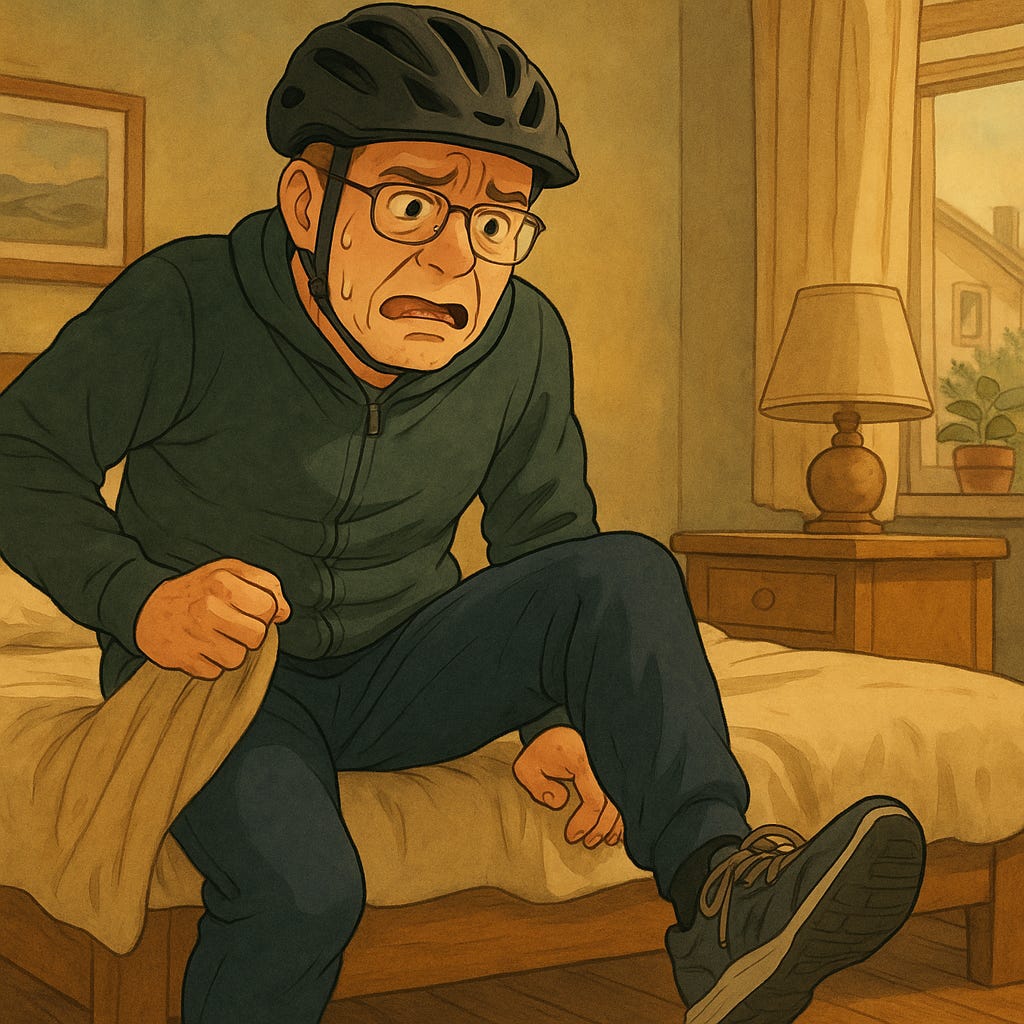
I woke up this morning hoping yesterday’s hill sprint injury was just a scare. That maybe I’d overreacted. Maybe I just tweaked something. But the truth came fast. My knee? Still tight. Still sore. Still refusing to cooperate.
It’s now the second day since that brutal uphill lunge at Blue Mountain where something behind my right knee gave way during a final sprint. I’ve been shuffling around the house, leg slightly bent like a rusted hinge that won’t fully extend. There’s no sharp pain—thankfully—but there’s a deep, dull ache that seems to radiate from the top of my calf up toward the base of my hamstring. Bending the knee too far or pointing my toes up? That sets it off like a slow-burn alarm.
I’ve stuck to the plan: icing every few hours, keeping the leg elevated, wrapping it loosely with compression, and keeping my steps minimal. I even popped a couple Excedrin to quiet the inflammation and let my brain focus on something besides worst-case scenarios.
But that feeling... it’s still in my head. The pop. The moment my toe drove into the hill and my body betrayed me. The helplessness of dropping to the ground, wondering if I’d just signed myself up for a summer on the sidelines.
Emotionally, yesterday was tough. The anxiety hit hard. I couldn’t shake the fear that I’d done something serious—maybe torn something that doesn’t bounce back without surgery or months of PT. My partner, Mo, kept nudging me toward calling a professional. I almost did. But part of me wanted to wait. Let the initial storm settle. I’ve had soft tissue injuries before. They talk loud at first.
So I gave myself 48 hours. I needed that space to evaluate things clearly, not from panic. And today? I’m still not walking normal, but I am moving a little easier. The pain hasn’t worsened. If anything, it’s more predictable now.
That gives me hope.
Tomorrow, the 48-hour mark hits. If I’m not significantly better, I’ll call a PT and get this looked at. But for now, it’s rest, patience, and cautious optimism.
Disclaimer: This post reflects my personal recovery experience, combined with insights from AI-guided sports injury analysis — as well as writing ideas. Always seek professional medical advice for diagnosis and treatment.