
Fact-Check Report
Analyzing the latest NeuroSync episode: "Where Minds and Machines Meet"

Contents

What an enlightening conversation that was! In the latest episode of NeuroSync, we explored the unexpected intersection of oral health, longevity science, and AI-led routines, featuring a deep dive into Dr. Ellie Phillips’ Complete Mouth Care System. But big claims deserve close scrutiny.
In this follow-up, I’m breaking down the science behind the system discussed, comparing it to emerging alternatives, and asking: does Dr. Ellie’s approach really hold up under the microscope? And could there be a better path forward?
Let’s get to the bottom of what was said—and what’s actually backed by evidence.
Dr Ellie Phillips System
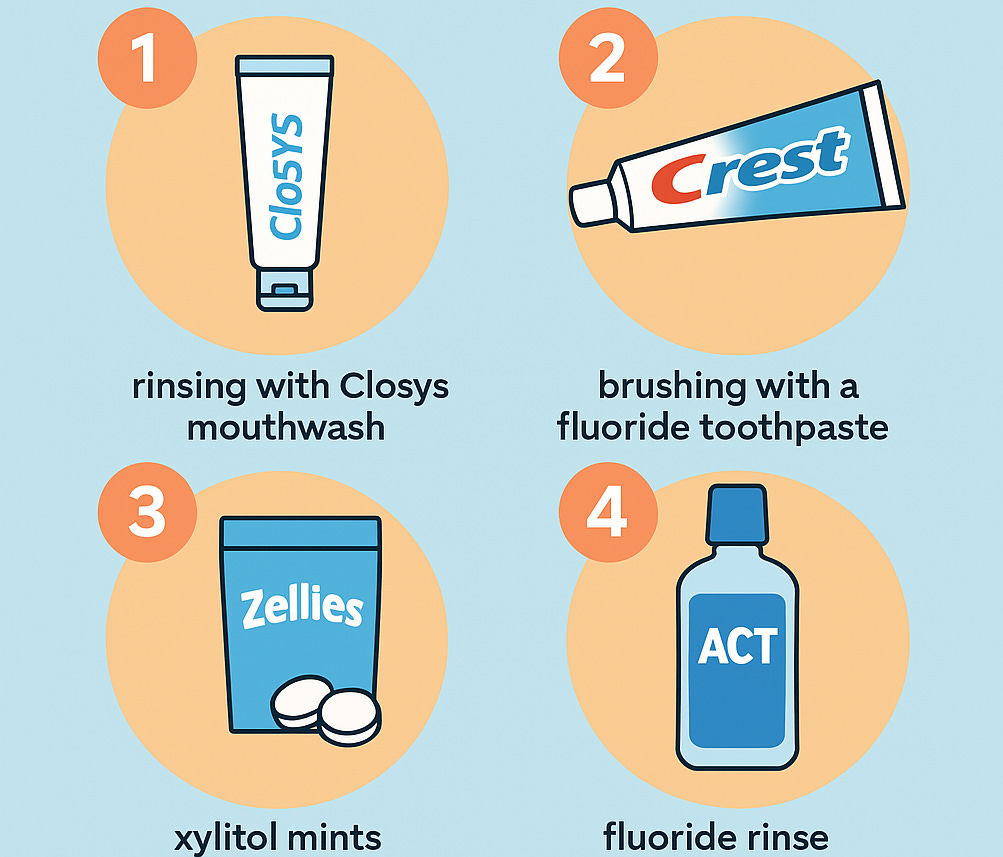
Dr. Ellie Phillips, a dentist and author, advocates a Complete Mouth Care System built around specific over-the-counter products used in a precise sequence for optimal oral health (Dr. Ellie's Complete Mouth Care System) (Dr. Ellie's Complete Mouth Care System). The core components of her regimen include:
Xylitol (Zellie’s mints or gum) – used throughout the day (6–10 grams total) to neutralize oral acidity and promote remineralization (Complete Mouth Care System - DrEllie.com) (Complete Mouth Care System - DrEllie.com). Xylitol stimulates alkaline saliva that buffers acids (raising pH) and helps redeposit minerals into enamel. It also acts as a prebiotic, fostering beneficial bacteria that protect against cavities and gum disease (Complete Mouth Care System - DrEllie.com). (Dr. Phillips emphasizes chewing xylitol gum or mints after every meal, snack, or drink to keep the mouth pH neutral and prevent acid erosion (Complete Mouth Care System - DrEllie.com).)
CloSYS pre-rinse (stabilized chlorine dioxide) – a pre-brush mouthwash used before toothbrushing (Complete Mouth Care System - DrEllie.com). CloSYS is pH-neutral, so it ensures brushing is not done in an acidic environment (which could abrade enamel) (Complete Mouth Care System - DrEllie.com). It reacts with saliva to release low-level oxygen; a 60-second rinse (no more, no less) oxygenates the mouth and disrupts anaerobic bacteria that cause cavities and periodontal disease (Complete Mouth Care System - DrEllie.com). This step reduces harmful microbes without harshness, making it safe for good bacteria when used as directed (Complete Mouth Care System - DrEllie.com). By neutralizing acids and killing acid-producing germs, the pre-rinse helps protect teeth during brushing.
Crest Cavity Protection Toothpaste (Regular Paste) – a fluoride toothpaste applied with brushing (Complete Mouth Care System - DrEllie.com). Dr. Phillips specifically recommends this old-fashioned Crest formula because it contains sodium fluoride at the optimal 0.24% (≈1100 ppm) concentration for cavity prevention, no stannous fluoride (which can cause staining), and has the right abrasivity and no glycerin in the ingredients (Complete Mouth Care System - DrEllie.com) (Complete Mouth Care System - DrEllie.com). (Many modern toothpastes include glycerin as a humectant, but she argues glycerin may coat the teeth and impede remineralization. In fact, Crest confirms that their Cavity Protection line in “Regular” flavor is glycerin-free (Glycerin in Toothpaste: What You Need to Know - Crest).) This fluoride paste’s role is to strengthen enamel by forming fluorapatite and to “stop cavities before they start” (Complete Mouth Care System - DrEllie.com). Brushing is also seen as a way to massage gums and stimulate circulation (for gum health) rather than aggressively scrubbing teeth (Complete Mouth Care System - DrEllie.com) (Complete Mouth Care System - DrEllie.com). Dr. Phillips even advises using a firmer brush (to effectively massage gums) if the CloSYS rinse is used first to protect against abrasion (Complete Mouth Care System - DrEllie.com).
Listerine (Original or Cool Mint) – an antiseptic rinse used after brushing (Complete Mouth Care System - DrEllie.com) (Complete Mouth Care System - DrEllie.com). Listerine’s essential oils (eucalyptol, menthol, thymol, and methyl salicylate) target the specific bacteria that form plaque and cause gum inflammation. Dr. Phillips highlights that Listerine can reduce Streptococcus mutans (a chief cavity-causing microbe) by 99.9%, thereby controlling plaque and gingivitis (Complete Mouth Care System - DrEllie.com). This is the “bacteria control” step of her system. She notes that only the two classic formulations (Original amber or Cool Mint) should be used – not the newer variants – to get the proven effect (Complete Mouth Care System - DrEllie.com). A common concern is that strong antiseptic rinses might disrupt the oral microbiome or nitric oxide-producing bacteria, but Dr. Phillips asserts that Listerine does not harm beneficial bacteria or nitric oxide production, calling that a “completely false myth” (Complete Mouth Care System - DrEllie.com). (Essential oil rinses do have broad antibacterial action, but research shows they have a milder impact on the oral microbiome compared to chlorhexidine. One study found chlorhexidine mouthwash significantly reduced nitric-oxide–producing bacteria and raised blood pressure, whereas Listerine had no measurable effect on salivary nitrite levels ( Short-term effects of Chlorhexidine mouthwash and Listerine on oral microbiome in hospitalized patients - PMC ) ( Short-term effects of Chlorhexidine mouthwash and Listerine on oral microbiome in hospitalized patients - PMC ). Listerine can reduce some nitrate-reducing bacteria in the mouth, but to a much lesser degree than chlorhexidine ( Short-term effects of Chlorhexidine mouthwash and Listerine on oral microbiome in hospitalized patients - PMC ), supporting Dr. Phillips’ point that essential oils are selective enough to avoid major systemic effects.)
ACT Anticavity Rinse (0.05% sodium fluoride) – a fluoride mouthwash used last (Complete Mouth Care System - DrEllie.com) (Complete Mouth Care System - DrEllie.com). This rinse contains a low-concentration sodium fluoride (about 225 ppm) which is extremely effective for remineralizing enamel when used daily (Complete Mouth Care System - DrEllie.com). Dr. Phillips calls ACT the “vital finale” to her routine: after the mouth has been cleaned and harmful bacteria suppressed, the fluoride in ACT can adsorb onto teeth and drive minerals into the enamel over hours (Complete Mouth Care System - DrEllie.com). This strengthens the teeth, helps reverse early decay, and even reduces sensitivity (Complete Mouth Care System - DrEllie.com). (Importantly, one should not eat or drink for at least 30 minutes after, to allow remineralization to continue undisturbed (Complete Mouth Care System - DrEllie.com).) Topical fluoride rinses like ACT are well-established to prevent cavities and are as safe as fluoridated water – since you spit them out, there’s negligible ingestion (Complete Mouth Care System - DrEllie.com). This step is about enamel repair and protection, essentially bathing the teeth in fluoride to enhance their resistance to acids.
In summary, Dr. Ellie’s system is used twice daily (morning and before bed) in the exact order: Xylitol → CloSYS → Brush (Crest) → Listerine → ACT, plus xylitol after meals (Dr. Ellie's Complete Mouth Care System) (Dr. Ellie's Complete Mouth Care System). Each step has a distinct purpose: pH neutralization (xylitol, CloSYS) to safeguard enamel, mechanical cleaning & fluoride application (brushing with Crest) to strengthen enamel, targeted antibacterial action (Listerine) to control plaque microbes, and enhanced remineralization (ACT) to repair and harden enamel. Dr. Phillips’ rationale explicitly centers on bacteria control, acid neutralization, and enamel remineralization, which the conversation correctly noted. The synergy of these products “in harmony” quickly improves oral health when all are used as directed (Dr. Ellie's Complete Mouth Care System) (Dr. Ellie's Complete Mouth Care System). It is accurate that she insists the timing and sequence be followed exactly for full benefit (Dr. Ellie's Complete Mouth Care System) (Dr. Ellie's Complete Mouth Care System). Skipping or rearranging steps would diminish the protective interactions the system is designed to achieve.
Accuracy check: The conversation’s description of Dr. Phillips’ regimen is mostly accurate. She does indeed recommend CloSYS, Listerine, ACT, Crest Cavity Protection, and Zellie’s Xylitol in her program, used in that specific order, for the reasons of controlling bacteria, maintaining a safe pH, and repairing enamel (Complete Mouth Care System - DrEllie.com) (Complete Mouth Care System - DrEllie.com). Each product named matches her official recommendations. One nuance: Dr. Phillips does not explicitly mention coconut oil pulling or probiotics in her standard system (her focus is on the above products and general diet advice), so any reference to those in the conversation is part of an alternative regimen (addressed later in this report). Also, while she prioritizes these chemical agents, she does value physical plaque removal (e.g. thorough brushing and possibly flossing as needed), though she uniquely emphasizes gum massage and doesn’t put as much weight on flossing unless necessary. Overall, the core claims about her system’s steps and purposes are substantiated by her own writings and consistent with known science (fluoride’s effect on enamel, xylitol’s effect on pH, etc.). There is nothing glaringly false in how the conversation summarized her approach.
Sources: Dr. Phillips’ website and materials confirm the above regimen and reasoning (Complete Mouth Care System - DrEllie.com) (Complete Mouth Care System - DrEllie.com). For instance, she writes that “each step of this system has a specific purpose” and the products in combination “balance mouth biochemistry” better than any alone (Dr. Ellie's Complete Mouth Care System) (Dr. Ellie's Complete Mouth Care System). She specifically highlights xylitol for neutralizing acids (Complete Mouth Care System - DrEllie.com), CloSYS to prep for safe brushing (Complete Mouth Care System - DrEllie.com), Listerine to cut plaque bacteria by 99.9% (Complete Mouth Care System - DrEllie.com), and ACT to “naturally repair, strengthen, and beautify tooth enamel” by promoting remineralization (Complete Mouth Care System - DrEllie.com). These match the conversation’s attributions of pH balance, bacterial control, and enamel repair roles.
Toothpaste Comparison: Crest vs Arm & Hammer vs Wellnesse
The conversation compared Crest Cavity Protection (the toothpaste Dr. Phillips recommends) with two other toothpastes: Arm & Hammer Sensitive and Wellnesse Whitening. Below is a fact-check of their differences in formulation, effectiveness, and safety:
Crest Cavity Protection (Regular Paste): This is a conventional fluoride toothpaste. Its active ingredient is sodium fluoride 0.243% (providing ~1100 ppm fluoride ions), a proven anticaries agent. Notably, Crest’s “Regular” Cavity Protection paste contains no glycerin (Glycerin in Toothpaste: What You Need to Know - Crest) (unlike most toothpastes that use glycerin as a moistener). Dr. Phillips favors it partly for this reason, as she believes glycerin might leave a film that slows remineralization. Crest confirms that the Cavity Protection line (Regular flavor, Cool Mint gel, etc.) is indeed glycerin-free (Glycerin in Toothpaste: What You Need to Know - Crest). It also does not have tartar control additives or stannous fluoride; its fluoride is the sodium fluoride form which does not cause staining. The abrasive in it is likely hydrated silica at a moderate level, suitable for daily use. Effectiveness: This paste is very effective at preventing cavities thanks to fluoride – in fact, the packaging can claim it “helps stop cavities before they start” (Complete Mouth Care System - DrEllie.com). Fluoride in toothpaste has decades of research showing ~20–40% reduction in caries risk in various populations and is endorsed by dental authorities worldwide (). Safety: Fluoride toothpaste is safe for adults and children (with supervision on amount) – the only caution is to avoid swallowing large amounts, especially in kids, to prevent fluorosis. Crest Regular paste is a simple, no-frills formula; it lacks extra ingredients like whitening peroxides or potassium nitrate. Dr. Phillips likes its simplicity and consistent results in promoting remineralization (Complete Mouth Care System - DrEllie.com).
Arm & Hammer Sensitive (Sensitive Teeth & Gums): This is a fluoride toothpaste with additional ingredients for sensitivity relief. Its actives are sodium fluoride 0.24% (again ~1100 ppm fluoride) for cavities, plus potassium nitrate 5% to reduce tooth sensitivity by calming nerve responses (Arm and Hammer Sensitive Teeth and Gums). It’s also marketed as “Naturally Powered by Baking Soda,” meaning it contains baking soda (sodium bicarbonate) as a main ingredient (Arm and Hammer Sensitive Teeth and Gums). Baking soda is a mild abrasive and pH-buffering agent; it can help neutralize acids in the mouth (somewhat like how xylitol does) and is gentle on enamel (low abrasivity). The inactive ingredient list for Arm & Hammer Sensitive includes sorbitol, glycerin, hydrated silica, sodium lauryl sulfate (SLS), flavor, and cellulose gum, among others (Arm and Hammer Sensitive Teeth and Gums). So unlike Crest Regular, it does contain glycerin (as most commercial toothpastes do) (Arm and Hammer Sensitive Teeth and Gums). Effectiveness: For cavity prevention, it should be on par with Crest since it has a similar fluoride level. It also claims “triple enamel protection” – fluoride to strengthen enamel, baking soda to neutralize acid, and possibly the low abrasivity to avoid wear (Sensitive Toothpaste - Arm & Hammer). For sensitivity, the potassium nitrate is an FDA-approved desensitizing agent that if used for 2+ weeks can reduce sensitivity of exposed dentin. There’s no reason to think this paste is inferior at preventing decay; it’s basically fluoride plus some extras. Dr. Phillips’ perspective: She doesn’t include this product in her regimen, likely because (1) it has glycerin (which she avoids), (2) it contains SLS (which can irritate some people or cause canker sores, though that’s not a focus of her system), and (3) she prefers sodium fluoride without other additives – she has observed better results with Crest’s specific formula (Complete Mouth Care System - DrEllie.com). There is no indication that Arm & Hammer Sensitive is unsafe or ineffective – it’s ADA-accepted for cavity protection. However, if the conversation implied that Arm & Hammer’s glycerin might “coat teeth,” that is a hypothesis not strongly backed by scientific studies (no conclusive evidence shows glycerin prevents remineralization; this idea originates from alternative dentistry circles). In summary, Arm & Hammer Sensitive provides fluoride protection just like Crest, and also helps with sensitivity; it would be an acceptable toothpaste in general, but it does not align with Dr. Phillips’ specific no-glycerin criterion.
Wellnesse Whitening Toothpaste: This is a fluoride-free toothpaste that instead uses nano-hydroxyapatite (n-HAp) for remineralization. Wellnesse is a natural product brand, and their Whitening Toothpaste is marketed as “remineralizing fluoride-free hydroxyapatite toothpaste”. The formula contains 5% micro-hydroxyapatite (a form of calcium phosphate similar to the mineral of teeth) along with other natural ingredients like neem oil, green tea, and xylitol, and importantly it is glycerin-free as well (Whitening Remineralizing Fluoride-Free Hydroxyapatite Toothpaste | Wellnesse | Wellnesse) (Wellnesse Whitening Toothpaste, Fresh Mint - Thrive Market). The absence of glycerin is a selling point, likely to appeal to those who share the concern about glycerin coatings. Effectiveness: Hydroxyapatite in toothpaste has been gaining attention as an alternative to fluoride. It remineralizes by directly integrating into enamel micro-cracks and lesions. Studies have shown that a 10% hydroxyapatite toothpaste can be as effective as 500 ppm fluoride in remineralizing early caries lesions ( The use of hydroxyapatite toothpaste to prevent dental caries - PMC ), and that children’s 10% HAp toothpaste was non-inferior to an 1100 ppm fluoride paste in preventing cavities over 2-3 years ( The use of hydroxyapatite toothpaste to prevent dental caries - PMC ). In some in vitro studies, nano-hydroxyapatite even outperformed fluoride in repairing enamel subsurface lesions ( Analysis of Dental Enamel Remineralization: A Systematic Review of Technique Comparisons - PMC ). So, while Wellnesse lacks fluoride, it is not “doing nothing” – the hydroxyapatite can strengthen enamel and reduce sensitivity. The green tea and neem have mild antimicrobial properties (green tea polyphenols can inhibit bacteria, neem is traditionally antibacterial), and xylitol in it can help with pH and bacteria as well. However, because it’s fluoride-free, it does not have the ADA Seal (the ADA requires fluoride for its Seal (Toothpastes | American Dental Association)). Safety: Wellnesse’s ingredients are natural and safe to swallow in small amounts (one of the advantages of hydroxyapatite is that there’s no toxicity or fluorosis risk – it’s biocompatible ( The use of hydroxyapatite toothpaste to prevent dental caries - PMC )). The hydroxyapatite particle size is nano/micro, which research suggests is effective in filling enamel and safe (enamel itself is made of nano-scale crystallites) ( The use of hydroxyapatite toothpaste to prevent dental caries - PMC ) ( The use of hydroxyapatite toothpaste to prevent dental caries - PMC ). Dr. Phillips’ perspective: She generally advocates for fluoride because of its long track record. She might view a hydroxyapatite toothpaste as less proven in real-world outcomes, even if it’s promising. Notably, Dr. Phillips specifically recommends the Crest formula and cautions against “modern formulations” that she says are not part of her system (Complete Mouth Care System - DrEllie.com). Wellnesse would fall under a “modern natural” formulation she hasn’t endorsed. That said, the science does support nano-hydroxyapatite as an effective remineralizer, so Wellnesse likely does a good job at strengthening enamel ( The use of hydroxyapatite toothpaste to prevent dental caries - PMC ). The difference is it fights cavities via enamel repair (and possibly reducing bacteria adherence) rather than via fluoride’s chemical prevention mechanism.
Comparison Summary: All three toothpastes have the goal of preventing cavities and promoting enamel health, but they use different strategies:
Crest: Conventional fluoride toothpaste, no glycerin. Backed by decades of data for cavity prevention. No direct desensitizing agent (but by remineralizing, it can reduce sensitivity over time). Very aligned with Dr. Phillips’ system (she chose it specifically for its composition) (Complete Mouth Care System - DrEllie.com) (Complete Mouth Care System - DrEllie.com).
Arm & Hammer Sensitive: Fluoride + potassium nitrate + baking soda, contains glycerin. Should protect against cavities equally well (same fluoride level) and also address sensitivity. Baking soda may help neutralize acids (a plus for pH). However, the presence of glycerin and SLS might be seen as drawbacks by the Phillips approach. There is no evidence that this toothpaste is harmful; it’s more a matter of Dr. Phillips’ preference and unproven theory about glycerin. So, if the conversation implied Arm & Hammer is worse for remineralization due to glycerin, that claim is unsupported by hard evidence (it’s speculative). The paste does strengthen enamel (they even advertise enamel strengthening (Arm and Hammer Sensitive Teeth and Gums)), and since it’s low-abrasion, it won’t wear enamel. It simply doesn’t fit the exact parameters of the “Complete Mouth Care System.”
Wellnesse Whitening (Hydroxyapatite): Fluoride-free, uses n-HAp to rebuild enamel, no glycerin. It aligns with the idea of avoiding certain chemicals (for those concerned about fluoride or glycerin), and evidence suggests it can protect teeth similarly to fluoride ( The use of hydroxyapatite toothpaste to prevent dental caries - PMC ). The major difference is less long-term clinical evidence and no official endorsements yet. If the conversation suggested hydroxyapatite is ineffective or “less proven,” note that recent studies show it’s quite effective at remineralization and preventing caries – even described as “promising” or equivalent to fluoride in several trials ( The use of hydroxyapatite toothpaste to prevent dental caries - PMC ). However, fluoride is still considered the gold standard in the U.S. pending more research.
Bottom line: Crest vs. Wellnesse: Crest will prevent cavities via fluoride; Wellnesse likely will via hydroxyapatite – a different mechanism but with scientific support. Crest has the edge of long-term population-level proof, whereas Wellnesse appeals for its natural ingredients and absence of fluoride (which some prefer to avoid). Crest vs. Arm & Hammer: They are more similar than different in anti-cavity power; Arm & Hammer just has extras for sensitivity and uses baking soda. Dr. Phillips would choose Crest, but an unbiased view is that both deliver fluoride – one isn’t dramatically superior at cavity prevention. If one’s goal is to follow Dr. Phillips exactly, then Crest (no glycerin) is the choice. But it’s not that Arm & Hammer doesn’t work – it does (and might help if you have sensitive teeth, which Crest Regular won’t specifically address).
We did not find any misleading claims about these toothpastes in the conversation excerpt provided, aside from the possible implication that glycerin is definitively bad (which, again, isn’t proven – it’s more of a theoretical concern). As a factual matter: Crest Cavity Protection and Arm & Hammer Sensitive both use sodium fluoride (~1100 ppm) which is effective for preventing decay (Arm and Hammer Sensitive Teeth and Gums); Wellnesse does not use fluoride but uses nano-hydroxyapatite, which research indicates can remineralize and prevent cavities comparably well in a daily toothpaste ( The use of hydroxyapatite toothpaste to prevent dental caries - PMC ). Each has advantages: fluoride is widely endorsed and cheap, hydroxyapatite is biocompatible and avoids any fluoride controversies.
Sources: Ingredient lists from official sources (Arm and Hammer Sensitive Teeth and Gums) (Glycerin in Toothpaste: What You Need to Know - Crest), and a review in Nigerian Medical Journal noting baking soda toothpastes help neutralize acids. Studies comparing HAp vs fluoride (Frontiers in Public Health 2022) show 10% hydroxyapatite paste had similar cavity prevention as fluoride in children ( The use of hydroxyapatite toothpaste to prevent dental caries - PMC ). Crest’s site confirms which of their pastes are glycerin-free (Glycerin in Toothpaste: What You Need to Know - Crest). No evidence was found that Arm & Hammer’s inclusion of glycerin negates its fluoride benefit (ADA would not accept it if it didn’t work – and it is marketed to strengthen enamel and has the ADA Seal).
Sodium Fluoride vs Nano Hydroxyapatite
A key comparison in the conversation was between sodium fluoride (the traditional anti-cavity agent in toothpastes and rinses) and nano-hydroxyapatite (an alternative ingredient in some modern toothpastes) regarding how they work, how effective they are, and their safety or broader health implications. Here is a fact-checked comparison:
Mechanism of Action: Fluoride and nano-hydroxyapatite both aim to harden tooth enamel, but they do so differently:
Sodium Fluoride: Fluoride works primarily by chemically integrating into the tooth’s mineral matrix. In the presence of calcium and phosphate (from saliva), fluoride catalyzes the remineralization of enamel, forming fluorapatite, which is harder and more acid-resistant than the original hydroxyapatite in enamel ( The use of hydroxyapatite toothpaste to prevent dental caries - PMC ). Fluoride also inhibits the bacteria that cause decay; at high concentrations it can impede bacterial enzymes (like those that make acid). However, fluoride’s remineralization mainly affects the surface layer of enamel lesions because it relies on minerals diffusing in from saliva ( The use of hydroxyapatite toothpaste to prevent dental caries - PMC ) ( The use of hydroxyapatite toothpaste to prevent dental caries - PMC ). It doesn’t deliver calcium/phosphate; it just helps incorporate what’s already available in saliva. Thus, fluoride excels at repairing the outer enamel and preventing new demineralization but has limited ability to reach deeper into a subsurface lesion. Over decades, fluoride use (toothpaste, water fluoridation) has dramatically lowered cavity rates by continuously repairing early damage and making enamel less soluble ( Analysis of Dental Enamel Remineralization: A Systematic Review of Technique Comparisons - PMC ) ( Analysis of Dental Enamel Remineralization: A Systematic Review of Technique Comparisons - PMC ). It’s considered a passive approach – encourage the tooth to uptake minerals from its environment.
Nano-Hydroxyapatite (n-HAp): Hydroxyapatite is essentially the same mineral that teeth are made of (calcium phosphate). In nano form, these particles can directly fill microscopic pores and lesions in enamel ( The use of hydroxyapatite toothpaste to prevent dental caries - PMC ) ( The use of hydroxyapatite toothpaste to prevent dental caries - PMC ). The n-HAp crystals bind to the tooth surface and even into tiny defects, where they act as seed crystals for new mineral deposition ( The use of hydroxyapatite toothpaste to prevent dental caries - PMC ). In essence, they “patch” the enamel with new mineral, akin to a biomimetic repair. Unlike fluoride, which needs saliva’s calcium, hydroxyapatite supplies calcium and phosphate directly to the tooth ( The use of hydroxyapatite toothpaste to prevent dental caries - PMC ) ( The use of hydroxyapatite toothpaste to prevent dental caries - PMC ). Research suggests n-HAp can remineralize not just the surface but also the deeper layers of early carious lesions, because the nano particles can penetrate into the porous enamel matrix and deposit there ( The use of hydroxyapatite toothpaste to prevent dental caries - PMC ) ( The use of hydroxyapatite toothpaste to prevent dental caries - PMC ). One source notes: “In comparison to fluorides which are limited to surface remineralization, HAP particles are able to penetrate into the deeper layers of the lesion.” ( The use of hydroxyapatite toothpaste to prevent dental caries - PMC ). The principle here is biomimicry – providing the tooth with the same material it’s built from, to heal itself. Additionally, hydroxyapatite can form a coating on the enamel that makes it smoother and possibly less prone to bacterial adhesion. So, n-HAp’s approach is both additive (filling mineral in) and protective (coating enamel).
Effectiveness (Caries Prevention and Remineralization): Both agents are effective, but let’s examine what studies show:
Fluoride: The effectiveness of fluoride in preventing cavities is beyond doubt. Numerous clinical trials and epidemiological studies over 70+ years have shown fluoride toothpaste reduces cavity incidence significantly. For example, the American Academy of Pediatric Dentistry states that fluoride (systemic and topical) is “an effective therapy in reducing the prevalence of dental caries” in children and adolescents (). Water fluoridation at ~1 ppm reduces decay by about 25% in populations, and brushing with fluoride paste adds additional protection. However, fluoride is not 100% – cavities can still occur, especially with high sugar intake or poor oral hygiene, but it greatly lowers the risk by continually repairing early lesions (white spots) before they progress. In terms of remineralizing early enamel lesions, fluoride is very effective at hardening the surface so the lesion doesn’t progress, though a “scar” of subsurface porosity might remain ( Analysis of Dental Enamel Remineralization: A Systematic Review of Technique Comparisons - PMC ) ( Analysis of Dental Enamel Remineralization: A Systematic Review of Technique Comparisons - PMC ). It’s worth noting that high-fluoride products (like prescription 5000 ppm pastes or varnishes) can even remineralize some deeper lesions, but here we’re focusing on regular use (1000 ppm range). Overall, fluoride is the gold standard for cavity prevention – it’s inexpensive, easy to use, and has a mountain of evidence.
Nano-Hydroxyapatite: Though n-HAp is relatively newer in oral care (actually used in Japan since the 1980s, but now gaining global interest), research is showing it is comparable to fluoride in efficacy. A 2019 randomized controlled trial found a nano-hydroxyapatite toothpaste outperformed a fluoride toothpaste in remineralizing white spot lesions over 6 months ( Analysis of Dental Enamel Remineralization: A Systematic Review of Technique Comparisons - PMC ). A 2022 systematic review concludes: “Research appears to demonstrate either its superiority or equivalency to fluoride toothpaste as anti-caries agents… the results of current in vivo studies are promising.” ( The use of hydroxyapatite toothpaste to prevent dental caries - PMC ) ( The use of hydroxyapatite toothpaste to prevent dental caries - PMC ). Specifically, several studies have shown non-inferiority: e.g., a 10% micro-HAp toothpaste was as effective as a standard fluoride paste in preventing new cavities in children over 1-3 years ( The use of hydroxyapatite toothpaste to prevent dental caries - PMC ). An in situ study showed 10% HAp and 1450 ppm fluoride achieved similar gains in enamel hardness ( The use of hydroxyapatite toothpaste to prevent dental caries - PMC ). For early enamel lesions, some in vitro tests even found better remineralization with nano-HAp than with 1000 ppm fluoride ( Analysis of Dental Enamel Remineralization: A Systematic Review of Technique Comparisons - PMC ) ( Analysis of Dental Enamel Remineralization: A Systematic Review of Technique Comparisons - PMC ). One review stated: “Nano-hydroxyapatite exerts a significantly greater remineralizing impact on early enamel lesions than commonly used fluorides.” ( Analysis of Dental Enamel Remineralization: A Systematic Review of Technique Comparisons - PMC ) (This likely refers to the ability to restore subsurface mineral, not just surface). However, it must be acknowledged that long-term real-world data (like 5-10 year cavity outcomes in a population) are still limited for HAp. Most studies are shorter-term or on early lesions. Yet, the evidence so far is very encouraging that n-HAp can prevent cavities effectively. For example, a 2019 trial in adults found a hydroxyapatite toothpaste was not inferior to fluoride paste in preventing caries over 18 months (Nano-hydroxyapatite vs fluoride | Lonestar Kid's Dentistry Prosper TX). Another meta-analysis in 2021 found “no statistically significant difference in caries increment” between HAp and fluoride toothpaste users (Comparative efficacy of a hydroxyapatite and a fluoride toothpaste ...). So in terms of effect, fluoride and nano-hydroxyapatite both work well to strengthen teeth and reduce caries, each with slight pros/cons: fluoride might stop progression a bit better at the surface, HAp might fill lesions more completely. Bottom line: Current evidence suggests nano-hydroxyapatite is about as effective as fluoride for everyday cavity prevention ( The use of hydroxyapatite toothpaste to prevent dental caries - PMC ), though fluoride remains the more extensively proven benchmark.
Safety and Broader Health Implications: This is where differences between fluoride and HAp often drive people’s preferences.
Sodium Fluoride Safety: Used properly, fluoride in oral care is very safe. Fluoride toothpastes have an excellent safety record when used as directed (a pea-size spit out, not swallowed in quantity). Dental fluorosis is a known risk for children who ingest too much fluoride during tooth development – it’s a cosmetic condition causing white spots or streaks on enamel. Using the recommended small smear of toothpaste for young kids and supervising them prevents this in almost all cases. The standard 0.05% fluoride rinse (like ACT) has a fluoride concentration similar to fluoridated water (Complete Mouth Care System - DrEllie.com), and you spit it out, so systemic absorption is minimal. Systemic health: In recent years, some studies have questioned if fluoride exposure (particularly from drinking water or supplements) could have broader health effects, like endocrine disruption or neurodevelopmental impact. Notably, a 2019 and 2020 set of studies found an association between high fluoride intake during pregnancy and slightly lower IQ in offspring. This prompted the U.S. National Toxicology Program to label fluoride as a “presumed developmental neurotoxin” at high doses. However, these findings are controversial and primarily relate to high-fluoride areas or ingestion of fluoride, not the controlled use in toothpaste/rinses (Developmental fluoride neurotoxicity: an updated review - PMC) (Fluoride Exposure and Children's IQ Scores: A Systematic Review ...). Major dental organizations like the ADA and AAPD have reviewed these concerns and maintain that fluoride at recommended levels (such as 0.7 ppm in water, or toothpaste use) is safe and not shown to cause systemic harm (). The AAPD’s statement (2024) explicitly says: while high doses have been ascribed to decreased IQ or endocrine effects, “the preponderance of evidence… does not support an association at recommended concentrations” () (). In other words, normal use of fluoride does not decrease cognitive ability – studies that suggested IQ effects involved exposure “much greater than those recommended” for oral health (). Similarly, regarding endocrine (thyroid, etc.), comprehensive reviews find no adverse effect of community water fluoridation on thyroid or hormones at 0.7 ppm. Extremely high intake (far above what dental products deliver if used properly) would be needed to have toxicity. Another consideration is the oral microbiome and systemic effects: Very frequent use of strong antimicrobial fluoride rinses (like high-strength fluoride or combined with antiseptics) could potentially alter the oral flora, but standard fluoride toothpaste doesn’t dramatically perturb the microbiome (fluoride is not an antibiotic; it’s targeted mostly at tooth mineral and plaque biochemistry). So overall, fluoride’s broader health profile: benefits far outweigh risks at proper doses. The main caveat is to prevent young children from swallowing large amounts (to avoid fluorosis), and for individuals who wish to avoid any ingestion of fluoride, be mindful of sources (toothpaste, water, etc.). Environmental impact: fluoride in wastewater can occur from spitting toothpaste, but at such low concentrations it’s not considered a major pollutant (the bigger issue is industrial fluoride, not consumer use).
Nano-Hydroxyapatite Safety: Hydroxyapatite is a natural component of bones and teeth, so unsurprisingly it has a high safety profile. It is non-toxic if swallowed – essentially it’s like ingesting a calcium supplement (in tiny amounts). There is no risk of fluorosis, obviously, since no fluoride is present ( The use of hydroxyapatite toothpaste to prevent dental caries - PMC ). In fact, hydroxyapatite toothpaste is often recommended for young children or pregnant women in countries like Japan and Italy precisely to avoid any fluoride ingestion risk while still protecting teeth ( The use of hydroxyapatite toothpaste to prevent dental caries - PMC ). Safety studies have shown no adverse effects from oral HAp use. Nano-particles might raise the question of whether they could penetrate tissues or have unforeseen effects, but nano-HAp agglomerates in saliva and tends to deposit on teeth or be swallowed; it does not penetrate through oral mucosa in any significant amount. Regulators have generally considered it safe – for example, the EU Scientific Committee on Consumer Safety reviewed nano-HAp in toothpaste and deemed it safe for adults and children (with some limits on particle size and concentration to be prudent). Another health angle: Oral microbiome – hydroxyapatite is not an antiseptic, so it doesn’t directly kill bacteria (which can be positive in that it doesn’t disturb the microbial balance). Some research even suggests hydroxyapatite might inhibit plaque formation by making a slick coating on teeth that bacteria can’t adhere to as well ( Analysis of Dental Enamel Remineralization: A Systematic Review of Technique Comparisons - PMC ). So it could promote a healthier microbiome or at least not disrupt it. There are no known side effects like irritation or allergy (it’s biocompatible; our body recognizes it). The only slight “risk” might be if someone has a milk allergy and the HAp is derived from milk (some products use dairy-derived HAp) – but most commercial ones use mineral-derived HAp. From a holistic health perspective, many people choose hydroxyapatite to avoid any theoretical fluoride issues; there is currently no evidence of any negative systemic effect from using HAp toothpaste. On the contrary, it’s being explored as a safe additive even in food to fortify calcium.
Broader Implications and Efficacy for Longevity: If we talk about long-term oral health and overall health, both fluoride and hydroxyapatite can maintain strong teeth into old age (preventing decay, which is important for nutrition and health). Fluoride’s long-term use has certainly shown that populations with fluoride have better tooth retention. Hydroxyapatite could offer similar benefits without fluoride – Japan has decades of experience where some toothpastes contain only HAp and they still have seen caries declines. One possible broader health consideration: using less fluoride could be beneficial in communities that already have multiple fluoride sources (water, salt, etc.) – it reduces cumulative exposure. Conversely, not using fluoride when cavity risk is high could lead to more dental disease, which itself is a health problem. So the choice can depend on individual risk factors and philosophies. It’s worth noting that both fluoride and hydroxyapatite address only part of cavity risk – diet (sugars), oral hygiene, genetics, etc., also play huge roles. So either ingredient must be part of a comprehensive approach.
In summary, the claim comparison: If the conversation claimed one is “better” than the other, the truth is nuanced. Sodium fluoride has a longer history and is still considered the benchmark for anti-caries (with ~25% caries reduction in populations) () (). Nano-hydroxyapatite is a newer but very promising alternative that in studies shows comparable remineralization and caries prevention performance ( The use of hydroxyapatite toothpaste to prevent dental caries - PMC ) ( The use of hydroxyapatite toothpaste to prevent dental caries - PMC ). Safety-wise, fluoride’s only real concern is if swallowed chronically in excess, whereas hydroxyapatite has no known systemic risks and no limit on age or amount (aside from general prudent use). Neither is known to cause systemic disease at the doses used in oral care – concerns about fluoride and IQ or endocrine effects apply to high ingestion levels, not normal brushing (). Thus, it would be misleading to say “nano-hydroxyapatite is unproven” – we have evidence it works – or to say “fluoride is dangerous” – at dental usage levels it is overwhelmingly safe and effective. A fair statement is: Both fluoride and nano-HAp toothpastes strengthen enamel and reduce cavities. Fluoride has more extensive proof over decades, while nano-HAp is backed by modern research showing equal efficacy in early trials. For someone looking to avoid fluoride for personal reasons, a hydroxyapatite toothpaste is an evidence-supported choice ( The use of hydroxyapatite toothpaste to prevent dental caries - PMC ). For someone with high cavity risk, fluoride’s track record might be reassuring. Some products even combine the two (there are toothpastes with both fluoride and hydroxyapatite, trying to get the best of both worlds).
Sources: A 2021 Frontiers in Oral Health review which provides a table comparing HAp vs fluoride ( The use of hydroxyapatite toothpaste to prevent dental caries - PMC ) ( The use of hydroxyapatite toothpaste to prevent dental caries - PMC ), indicating HAp fills lesions deeper and is not saliva-dependent, while fluoride is surface-acting and saliva-dependent. The conclusion of that review: HAp is a “biomimetic” that is safe and shows equivalence to fluoride in current studies ( The use of hydroxyapatite toothpaste to prevent dental caries - PMC ). Also, a 2019 systematic review in Materials noted “nano-hydroxyapatite reported better results than fluoride in remineralizing initial enamel lesions” ( Analysis of Dental Enamel Remineralization: A Systematic Review of Technique Comparisons - PMC ). For fluoride’s safety, the AAPD Best Practices document (2024) is cited, which addresses neurotoxicity concerns and finds no evidence of harm at 0.7 ppm in water (). ADA continues to endorse fluoride toothpaste for all ages (as soon as teeth erupt, in smear amounts for babies) because the risk/benefit is so favorable, which underscores its safety and importance for long-term dental health.
CloSYS Listerine ACT vs Coconut Oil Pulling
The conversation also drew comparisons between the mouthrinses in Dr. Phillips’ routine (CloSYS, Listerine, ACT fluoride rinse) and the practice of coconut oil pulling as alternative methods for oral care. We will examine the effectiveness and evidence of these rinses versus oil pulling:
CloSYS (Stabilized Chlorine Dioxide rinse): CloSYS is a gentle, flavor-neutral mouthwash whose active ingredient is chlorine dioxide (in a stabilized form). It’s primarily advertised for fighting bad breath (neutralizing volatile sulfur compounds) and as a pre-brush rinse to improve oral pH. Effectiveness: Chlorine dioxide has broad-spectrum antimicrobial activity. It kills anaerobic bacteria by oxidation. According to a 2021 systematic review of chlorine-dioxide mouthwashes, chlorine dioxide was as effective as chlorhexidine and herbal mouthwash in reducing plaque and gingival inflammation in short-term trials ( Effects of Chlorine Dioxide on Oral Hygiene - A Systematic Review and Meta-analysis - PMC ) ( Effects of Chlorine Dioxide on Oral Hygiene - A Systematic Review and Meta-analysis - PMC ). Specifically, no significant difference was found between chlorine dioxide rinse and chlorhexidine in plaque index reduction – both were better than placebo ( Effects of Chlorine Dioxide on Oral Hygiene - A Systematic Review and Meta-analysis - PMC ). For gingivitis (gum inflammation), again ClO2 performed comparably to chlorhexidine in those studies ( Effects of Chlorine Dioxide on Oral Hygiene - A Systematic Review and Meta-analysis - PMC ). This is impressive given that chlorhexidine is considered the “gold standard” antiseptic rinse (but with side effects like staining). CloSYS has the advantage of being alcohol-free, very mild in taste, and causing no staining. Dr. Phillips recommends using it before brushing to ensure the mouth isn’t acidic (chlorine dioxide rinses tend to be pH ~7) and to reduce bacterial load so that brushing is safer and more effective (Complete Mouth Care System - DrEllie.com) (Complete Mouth Care System - DrEllie.com). It’s also noted that swishing for a full 60 seconds is important to let it generate oxygen and disrupt the bad bugs (Complete Mouth Care System - DrEllie.com). Oil Pulling comparison: Coconut oil pulling is an ancient practice of swishing oil in the mouth (usually 10–20 minutes) to supposedly “pull” out bacteria and toxins. Does it achieve what CloSYS does? Likely not to the same degree. CloSYS’ chemical action in 1 minute can kill a significant portion of oral bacteria (especially anaerobes that cause bad breath and gum issues) (Complete Mouth Care System - DrEllie.com), whereas oil pulling relies on mechanical swishing and the mild antimicrobial property of coconut oil (lauric acid is antibacterial) – but it’s much less potent as a germ-killer. There have been a few studies: one noted after 2 weeks of daily coconut oil pulling, plaque and gingival indices did improve compared to baseline ( Effect of coconut oil in plaque related gingivitis — A preliminary report - PMC ). Another study found oil pulling reduced certain bacteria in saliva. However, a meta-analysis (2023) concluded: “Chlorhexidine remained superior in reducing plaque compared to oil pulling,” although oil pulling showed a “probable benefit” in improving gingival health (The effect of oil pulling in comparison with chlorhexidine and other mouthwash interventions in promoting oral health: A systematic review and meta-analysis - PubMed) (The effect of oil pulling in comparison with chlorhexidine and other mouthwash interventions in promoting oral health: A systematic review and meta-analysis - PubMed). In other words, oil pulling can slightly help gum inflammation, but it doesn’t cut plaque nearly as well as a medicated rinse. CloSYS was not specifically compared to oil in studies, but given its effect similar to chlorhexidine (which definitely outperforms oil), we can infer CloSYS would also beat oil pulling in plaque control. Oil pulling is also time-consuming (15 minutes of swishing vs 1 minute for CloSYS). Conclusion: CloSYS is an evidence-backed, efficient antibacterial pre-rinse; coconut oil pulling is at best a mild adjunct that might reduce plaque a bit and freshen breath by virtue of cleaning the mouth, but it is not a substitute for a proven antimicrobial rinse. The conversation’s implication that oil pulling could stand in for CloSYS is not supported – especially for the goal of pre-brush pH neutralization and oxygenation (oil does not oxygenate or raise pH appreciably, whereas CloSYS explicitly does both).
Listerine (essential oils rinse) vs. Oil Pulling: Listerine antiseptic (with essential oils and usually ~20% alcohol, except in alcohol-free versions) is clinically proven to reduce plaque and gingivitis. It has the ADA Seal for fighting plaque/gingivitis – regular use can reduce plaque by ~20-30% and gingivitis by ~28% according to clinical trials. The essential oils disrupt bacterial cell walls; in lab tests Listerine kills 99%+ of oral bacteria on contact. Dr. Phillips emphasizes Listerine’s ability to target Streptococcus mutans and other bad actors while not wiping out all flora (Complete Mouth Care System - DrEllie.com). We addressed above that Listerine’s impact on the microbiome is gentler than something like chlorhexidine – it selectively kills the most pathogenic bacteria that form plaque biofilm (Complete Mouth Care System - DrEllie.com). Effectiveness: Using Listerine twice daily can significantly improve gum health; it’s often recommended as an adjunct for people with gingivitis who can’t floss well. Now, coconut oil pulling vs Listerine: There have been a few direct comparisons. One small study (Peedikayil et al. 2015) showed oil pulling for 10 minutes daily did reduce plaque and gingival scores over 2 weeks, but it did not compare it to Listerine. Another study in 2016 compared oil pulling to chlorhexidine and found chlorhexidine far superior in reducing plaque, while oil had some benefit for gums. Anecdotally, some people feel oil pulling makes their mouth “cleaner,” but scientifically, Listerine’s antiplaque efficacy is much higher. For example, one randomized trial on adolescents found oil pulling reduced gingivitis, but brushing with mouthwash is still more effective (Oil pulling: Do dentists think it’s worth trying? | American Dental Association). The American Dental Association states: “There are no reliable scientific studies to show that oil pulling reduces cavities, whitens teeth or improves oral health and well-being.” (Oil pulling: Do dentists think it’s worth trying? | American Dental Association). That’s a strong statement – essentially saying stick to proven methods like antimicrobial rinses, brushing, flossing. So, if the conversation leaned towards “natural oil pulling is better or equal to Listerine,” that is misleading. Oil pulling might have a minor effect on gum health, but Listerine is definitively more potent in killing germs and reducing established plaque (plus it only takes 30 seconds of swishing). Conversely, if someone is averse to the burning sensation of Listerine or the alcohol, oil pulling is gentle – but one must commit a lot of time for a marginal benefit.
Another aspect: Cavity prevention. Listerine does not contain fluoride, so its benefit is mainly for gums/bacteria. Oil pulling likewise has no fluoride. Neither is a substitute for fluoride rinses or toothpaste in preventing cavities; they address bacteria and oral cleanliness. So for cavities, one shouldn’t rely on oil pulling – use fluoride or other remineralizing agents. Listerine at least lowers bacteria that produce acids, indirectly helping, but oil pulling’s cavity reduction is unproven (the ADA doesn’t credit it with any cavity prevention) (Oil pulling: Do dentists think it’s worth trying? | American Dental Association).
ACT Fluoride Rinse vs. Oil Pulling: ACT (or similar generic fluoride mouthwash) serves a different purpose than antibacterial rinses – it deposits fluoride on teeth to strengthen them. Using a fluoride rinse daily can reduce cavities by an additional ~25% on top of brushing with fluoride toothpaste, according to some studies, especially in high-risk individuals. It is a very effective way to remineralize early lesions; even though it’s low-dose, the frequent exposure helps. Oil pulling has no fluoride, no calcium/phosphate – so it provides zero direct remineralization. It cannot repair enamel or “make teeth stronger” in any chemical sense. At best, by possibly reducing plaque, it might slightly lower acid attacks, but this is indirect and not well demonstrated. If someone were to replace a nightly fluoride rinse with oil pulling, they would lose the proven enamel fortification from fluoride. Dr. Phillips explicitly says the final fluoride rinse is “vital” to her system for promoting mineral uptake into enamel and healing early decay (Complete Mouth Care System - DrEllie.com). Oil pulling cannot accomplish that. So comparing ACT to oil is really apples to oranges – one is a remineralizing treatment, the other is a folk cleansing method. For longevity of teeth (avoiding cavities), fluoride rinse is vastly more evidence-based. Oil pulling cannot prevent cavities on its own; even proponents usually still advise using regular toothpaste and diet control. The conversation mentions ACT vs coconut oil pulling – fact-check: any claim that coconut oil can “repair enamel” or “prevent cavities like fluoride” is false. There is no mineral in coconut oil to add to teeth, and no scientific study showing cavity reduction from oil pulling. On the other hand, fluoride rinse is known to reverse incipient decay and lower caries incidence (Complete Mouth Care System - DrEllie.com).
Safety and side effects: Coconut oil pulling is generally safe – the main caution is to avoid inhaling the oil (rare cases of lipid pneumonia have been reported in people who accidentally aspirated oil). It can also cause stomach upset if a lot is swallowed. But it’s relatively benign. Listerine’s side effects: it can cause a burning sensation due to alcohol and essential oils, and in some people, frequent use can cause mild tissue irritation or staining (the latter mostly with ingredients like methyl salicylate). Alcohol-based mouthwashes are not recommended for children or those with alcoholism. CloSYS side effects: virtually none – it’s one of the most gentle rinses (no alcohol, no strong flavor). ACT side effects: minimal, though ingesting too much fluoride rinse can cause nausea; supervision for kids is needed.
One more point: Some holistic advocates claim oil pulling “detoxifies” or has systemic benefits. There is no credible evidence for systemic benefits (like curing diseases) – that’s outside oral science. We focus on oral effects.
Conclusion (Mouthwashes vs Oil): The conversation likely compared these to gauge if oil pulling could replace or complement the conventional rinses. The fact-check is: Dr. Phillips’ recommended rinses (CloSYS, Listerine, ACT) each have strong evidence or rationale: CloSYS to reduce acidity and anaerobes (Complete Mouth Care System - DrEllie.com) (Complete Mouth Care System - DrEllie.com), Listerine to kill plaque germs (Complete Mouth Care System - DrEllie.com), ACT to remineralize enamel (Complete Mouth Care System - DrEllie.com). Coconut oil pulling, by contrast, has weak evidence – some small studies show a bit of improvement in gum indices with diligent daily use ( Effect of coconut oil in plaque related gingivitis — A preliminary report - PMC ) (The effect of oil pulling in comparison with chlorhexidine and other mouthwash interventions in promoting oral health: A systematic review and meta-analysis - PubMed), but it is not as effective as standard antimicrobials for plaque, nor does it provide fluoride’s benefits. The ADA does not endorse oil pulling, citing lack of reliable data (Oil pulling: Do dentists think it’s worth trying? | American Dental Association). So, it’s misleading if the conversation suggested oil pulling is equal to any of these rinses in their respective roles. However, it is fair to say oil pulling “won’t hurt” and can be an adjunct to standard care – for instance, someone could do oil pulling in addition to brushing and still use ACT rinse; that might give a slight extra reduction in gingivitis (as one study hinted) (The effect of oil pulling in comparison with chlorhexidine and other mouthwash interventions in promoting oral health: A systematic review and meta-analysis - PubMed). But doing it instead of fluoride or antiseptic rinses is not evidence-backed.
To put it succinctly: Listerine vs Oil Pulling – Listerine is far more potent against plaque/gingivitis (The effect of oil pulling in comparison with chlorhexidine and other mouthwash interventions in promoting oral health: A systematic review and meta-analysis - PubMed); ACT vs Oil – ACT actually strengthens teeth, oil does not; CloSYS vs Oil – CloSYS quickly neutralizes oral acids and bacteria, oil requires long swishing and has only minor antimicrobial effect.
Sources: International Journal of Dental Hygiene 2023 (systematic review and meta-analysis) – “Chlorhexidine remained superior in reducing plaque compared to oil pulling… very low certainty evidence for oil pulling’s benefit.” (The effect of oil pulling in comparison with chlorhexidine and other mouthwash interventions in promoting oral health: A systematic review and meta-analysis - PubMed). ADA MouthHealthy/News – “No reliable evidence that oil pulling reduces cavities or improves oral health,” and it’s not recommended as a substitute (Oil pulling: Do dentists think it’s worth trying? | American Dental Association). Nigerian Med J 2015 – coconut oil pulling resulted in reduced plaque index over 30 days in a group of teens (an interesting preliminary finding) ( Effect of coconut oil in plaque related gingivitis — A preliminary report - PMC ). These sources confirm that oil pulling can have a small positive effect on oral cleanliness, but nowhere near what fluoride or proven antimicrobials accomplish.
Proposed Alternative Oral Care System
At the end of the conversation, a hypothetical alternative oral care regimen was outlined, comprising: stabilized chlorine dioxide (pre-rinse), essential oils, nano-hydroxyapatite gel, coconut oil pulling, oral probiotics, and dietary/lifestyle practices. This appears to be an attempt to mirror Dr. Phillips’ system with more “natural” or alternative components (e.g. using hydroxyapatite instead of fluoride, adding probiotics, etc.). We will evaluate each component and the overall viability of this system compared to Dr. Phillips’ approach, especially in terms of maintaining oral health and promoting longevity of teeth and gums.
1. Stabilized Chlorine Dioxide Pre-Rinse: This is essentially the same step as CloSYS in Dr. Phillips’ routine. As discussed, chlorine dioxide rinses are effective at reducing oral bacteria and neutralizing acidity. If one cannot get CloSYS, any stabilized chlorine dioxide mouthwash (some brands are Closys, Oxyfresh, etc.) would serve the purpose. Dr. Phillips herself suggests in regions where CloSYS isn’t available, one could use a baking soda rinse or similar to neutralize pH (Dr. Ellie's System Outside The US - DrEllie.com) (Dr. Ellie's System Outside The US - DrEllie.com). So including this step in the alternative system is very much in line with evidence – it addresses the initial acid attack and lowers bacterial counts, setting the stage for remineralization. Evidence: We’ve cited that ClO2 rinses improve gingival health and can reduce volatile sulfur compounds (for breath) effectively ( Effects of Chlorine Dioxide on Oral Hygiene - A Systematic Review and Meta-analysis - PMC ) ( Effects of Chlorine Dioxide on Oral Hygiene - A Systematic Review and Meta-analysis - PMC ). Using it before brushing is logically sound (no harm to brush on neutral pH). Viability: This component is solid and evidence-supported. It’s basically the same as Dr. Phillips’ Step 2, so no issue here.
2. Essential Oils Rinse: This presumably refers to something like Listerine or a similar essential oil mouthwash (some natural brands use tea tree oil, etc., but Listerine’s combination is well studied). Essential oils provide broad antibacterial action, especially against the plaque-forming species. In the alternative system, an essential oil rinse would be analogous to Dr. Phillips’ Listerine step (bacteria control). Evidence: As noted, Listerine (essential oils) is proven to reduce plaque and gingivitis. If one wanted a less intense version, even a homemade thyme or tea tree oil rinse could have some antimicrobial effect, but Listerine’s specific formula has clinical data. There are alcohol-free versions of Listerine (using essential oils with a different solvent) if the user wants to avoid alcohol. In any case, including an essential oil antimicrobial step is evidence-based for gingival health (Complete Mouth Care System - DrEllie.com). It helps manage the bacterial aspect, which is critical for preventing gum disease and even cavities (since bacteria drive acid production). Viability: This is a strong component to keep. (The only people who might object are those who avoid strong antimicrobials to preserve the microbiome. One could debate daily essential oil rinse might slightly affect good bacteria – although as discussed it’s relatively selective. If someone were extremely concerned, they could alternate days or use a herbal version. But generally, it’s safe and effective.)
3. Nano-Hydroxyapatite Toothpaste/Gel: This replaces the fluoride toothpaste in Dr. Phillips’ system. We’ve extensively covered n-HAp vs fluoride above. Evidence: Nano-hydroxyapatite is shown to remineralize and prevent caries similarly to fluoride ( The use of hydroxyapatite toothpaste to prevent dental caries - PMC ) ( The use of hydroxyapatite toothpaste to prevent dental caries - PMC ). Japan’s dental products (like Apagard) have used HAp for decades with good results. Using a hydroxyapatite gel or toothpaste in the alternative system would provide the essential remineralization/enamel repair function that Dr. Phillips gets from Crest and ACT. In fact, a high-concentration hydroxyapatite gel could be even more potent – some products (like Remin Pro or NASA-developed pastes) have higher HAp content for therapy. Since the alternative system also includes a fluoride-free philosophy, n-HAp is the key to protecting enamel. Viability: This is a viable swap if the user is diligent. They should use the hydroxyapatite paste with thorough brushing to ensure it contacts all tooth surfaces. It’s worth noting that hydroxyapatite works even without needing to spit – it’s safe to swallow, so one could brush and just spit the excess, leaving a residue (like how ACT you leave on). This could enhance its effect. Dr. Phillips’ system relies heavily on fluoride; an HAp-based system relies on the HAp plus excellent oral hygiene and diet. If the user has very high cavity risk (e.g., active decay, high sugar intake), some dentists might worry about dropping fluoride; but if the user is motivated (good diet, etc.), hydroxyapatite can suffice. So, yes, this component is evidence-supported. It aligns with modern “remineralize naturally” approaches. The caveat: Because it’s not mainstream in the U.S., one must ensure the product is high quality (nano-sized HAp around 20-100 nm is effective ( The use of hydroxyapatite toothpaste to prevent dental caries - PMC )). Wellnesse, Bite toothpaste bits, Apagard, Boka, etc., are brands that have n-HAp. Many have positive user results (less sensitivity, etc.). Over long term, keeping cavity-free with HAp should be achievable if all other factors are controlled.
4. Coconut Oil Pulling: The alternative system explicitly includes oil pulling, which Dr. Phillips’ does not. This seems to be an “extra” step focusing on natural antimicrobial action and oral detox. Evidence: As covered, oil pulling can reduce plaque and bacteria modestly with rigorous use, but it is not as effective as conventional methods (The effect of oil pulling in comparison with chlorhexidine and other mouthwash interventions in promoting oral health: A systematic review and meta-analysis - PubMed). However, in an alternative system that possibly avoids stronger chemicals, oil pulling could serve as a supplemental cleaning step. For example, someone might do oil pulling in the morning to moisturize the mouth and reduce bacteria, and do the full routine at night. Or oil pulling could be done mid-day if one wants to freshen mouth without another brush. There’s also anecdotal evidence it can reduce oral thrush and improve gum bleeding in some cases. Viability: Oil pulling is fine as an adjunct – it likely won’t harm and might help a bit with plaque/breath. The concern is if someone uses it in place of proven steps (like skipping essential oils or fluoride and thinking oil alone will handle bacteria). In the proposed alt system, they didn’t remove the essential oil rinse; they added oil pulling on top. That’s actually possibly beneficial (one more method to reduce bacteria and break up plaque). The main cost is time and user compliance. Many people start oil pulling and then quit after a while because 15-20 minutes daily is burdensome. If the goal is longevity, one must be realistic about habit adherence. Dr. Phillips’ system takes about 5 minutes total, whereas adding oil pulling could add 15 minutes – some may not keep it up long-term. But from a purely oral health standpoint, adding oil pulling won’t hurt and might slightly improve gum health. It is not a substitute for flossing though – oil may not penetrate between teeth deeply; mechanical cleaning (floss/interdental brushes) is still needed for complete plaque removal, though neither Dr. Phillips nor the alt system explicitly mentioned floss. (It’s implied one should still floss or at least the brushing and rinsing do a lot; flossing is always a good adjunct, alternative system or not).
5. Oral Probiotics: This is something Dr. Phillips doesn’t include, but it’s an emerging area in oral care. Oral probiotics (lozenges or chewable tablets containing beneficial bacterial strains) aim to recolonize the mouth with harmless or beneficial bacteria that can crowd out pathogens. Common strains used are Streptococcus salivarius K12 and M18 (for reducing strep throat infections and cavities, respectively), Lactobacillus reuteri, L. paracasei, W. cibaria (for halitosis, plaque), among others (The Benefits of Probiotics on Oral Health: Systematic Review of the ...) (Probiotics for oral health: a critical evaluation of bacterial strains). Evidence: There have been numerous studies and some systematic reviews on oral probiotics. For example, a 2020 systematic review in Nutrients found probiotics can significantly reduce Streptococcus mutans levels and may reduce caries risk (though clinical caries outcomes are mixed) (The Benefits of Probiotics on Oral Health: Systematic Review of the ...). Another review in Frontiers in Oral Health 2021 concluded probiotics show promise in managing periodontal disease and caries, but they work best as adjuncts, not standalone treatments (Clinical Implications of Probiotics in Oral and Periodontal Health) (Probiotics for oral health: a critical evaluation of bacterial strains). Some specific findings: Lactobacillus reuteri lozenges have been shown to improve gingival index and reduce bleeding in gingivitis patients, and Streptococcus salivarius K12 probiotics can reduce volatile sulfur compounds (bad breath) and possibly reduce incidence of strep throat. For cavities, Lactobacillus rhamnosus GG in dairy was associated with lower cavity incidence in kids (Unlocking the potential of probiotic administration in caries ...). The idea is promising: repopulate the mouth with “good” bacteria so the bad ones find it harder to dominate. Viability: Including an oral probiotic in the alternative system could be beneficial, especially after using antimicrobials which might create a “clean slate” in the mouth. Taking a probiotic lozenge at bedtime (after the rinses) might help ensure the first colonizers on the freshly cleaned teeth are friendly bacteria rather than pathogenic ones. This could theoretically improve the oral microbiome balance over time. While not yet standard care, there’s no serious risk in using oral probiotics (they are typically strains already found in healthy mouths). It might support long-term gum health and reduce cavity-causing bacteria. So this component is forward-thinking and evidence-supported as an adjunct. It aligns with a holistic approach of not just killing bad germs but also promoting good ones. One just has to pick a probiotic with strains that have research (for example, S. salivarius K12/M18 for general oral health, L. reuteri Prodentis for gum health).
6. Dietary and Lifestyle Practices: This is a broad category but arguably the most important of all. Diet and lifestyle greatly influence oral health and systemic health (and thus “longevity” of one’s dentition). Dr. Phillips in her system does mention diet: she advocates for a diet rich in vegetables and nutrients to improve saliva quality (Complete Mouth Care System - DrEllie.com), and obviously minimizing sugary or acidic snacks. The alternative system likely would stress: low sugar and refined carbs (to starve cavity bacteria), possibly limiting frequency of snacking (to give teeth rest between acid attacks), a diet high in fibrous foods (which mechanically clean teeth and stimulate saliva), adequate vitamins and minerals (especially calcium, phosphate, vitamin D for tooth health), maybe avoiding smoking and excessive alcohol (for gum health), and so on. Evidence: Overwhelming – diet is fundamental. Frequent sugar intake is the number one risk factor for cavities in most people; reducing sugar drastically cuts cavity risk ( Analysis of Dental Enamel Remineralization: A Systematic Review of Technique Comparisons - PMC ). Getting enough vitamin D and calcium is associated with lower caries and stronger enamel. Crunchy fruits and veggies can help clean teeth surfaces. Additionally, lifestyle factors like managing dry mouth (staying hydrated, avoiding medications that cause dry mouth if possible) are important because saliva is the natural protector. If one is pursuing longevity, systemic health matters too: diabetes strongly affects gum disease – so keeping systemic conditions under control is key. Good nutrition supports the immune system to fight periodontal bacteria. Viability: Emphasizing diet and lifestyle is excellent and should be part of any oral care system. Dr. Phillips agrees: her Step 6 is “Enjoy a Healthy Diet” to make saliva as healthy as possible (Complete Mouth Care System - DrEllie.com). So the alternative system is on point to include this. It’s actually a strength – focusing on the root causes (sugars, nutrients) rather than just products.
Now, looking at the alternative system as a whole: It includes components for each key aspect of oral health:
Acid Neutralization & Initial Bacteria Reduction: Stabilized chlorine dioxide rinse (similar to Dr. Phillips’ CloSYS step) – Evidence-supported and effective (Complete Mouth Care System - DrEllie.com) ( Effects of Chlorine Dioxide on Oral Hygiene - A Systematic Review and Meta-analysis - PMC ).
Mechanical Cleaning & Remineralization: Brushing with nano-hydroxyapatite paste – Evidence-supported for remineralizing and preventing demineralization ( The use of hydroxyapatite toothpaste to prevent dental caries - PMC ) ( The use of hydroxyapatite toothpaste to prevent dental caries - PMC ). Should be done thoroughly to remove plaque (might still need floss for between teeth because neither system explicitly covers interdental cleaning – flossing or interdental brushes are implicitly recommended by dentists in addition to any system).
Targeted Antimicrobial Rinse: Essential oils rinse – Proven to reduce harmful bacteria and plaque (Complete Mouth Care System - DrEllie.com).
Enhanced Remineralization or Additional Anti-Caries: (In Dr. Phillips’ system this is the ACT fluoride rinse; in the alternative, they might rely on the hydroxyapatite plus maybe a fluoride-free calcium/phosphate rinse or just the paste. Perhaps they omitted a direct analog to ACT; one could consider using a product like MI Paste (casein phosphopeptide-ACP) or a calcium-phosphate rinse to mimic ACT’s mineral boost. But since they mentioned n-HAp gel, that probably covers it by itself.)
Extra Antimicrobial (optional): Coconut oil pulling – adds an extra bacterial reduction step, mainly for gum health. Not as critical, but a “nice to have” for those who want to do it.
Microbiome Rebalancing: Oral probiotics – helps repopulate good bacteria, could reduce risk of disease recurrence by competitive inhibition (The Benefits of Probiotics on Oral Health: Systematic Review of the ...) (Probiotics for oral health: a critical evaluation of bacterial strains).
Diet/Lifestyle: Reducing sugar, getting nutrients, etc. – absolutely fundamental for long-term success (no product can overcome a bad diet in the long run).
This alternative system is quite comprehensive – arguably more complex than Dr. Phillips’ because it has more components (especially adding oil pulling and probiotics). Complexity can reduce compliance: one challenge is whether an average person would consistently do all these steps. Dr. Phillips tried to keep her system to ~5 minutes, twice a day (Dr. Ellie's Complete Mouth Care System) (Dr. Ellie's Complete Mouth Care System). The alternative system, if fully done, might take longer (oil pulling itself ~15 min, though one could do it while showering or something; probiotics is just popping a lozenge at bedtime – not hard; diet is ongoing effort).
In terms of evidence and expected outcomes: If someone diligently followed the alternative system, they would likely achieve excellent oral health – low plaque levels, strong enamel, balanced oral flora, and good systemic support. Let’s consider a few scenarios:
Cavity Prevention: The alt system uses hydroxyapatite and possibly xylitol (was xylitol mentioned? It said Zellie’s mints in Dr. Phillips, not sure if alt included xylitol – but if they include diet, maybe they’d include xylitol in diet). Without fluoride, the main anti-caries defenses are hydroxyapatite, xylitol (if used), probiotics (some can reduce S. mutans), and low sugar diet. This can work. Evidence shows xylitol (6-10g per day) can reduce caries by reducing S. mutans and helping remineralize (though some of xylitol’s benefits have been debated, it does increase saliva and pH) (Complete Mouth Care System - DrEllie.com). Hydroxyapatite will directly repair enamel. Probiotics like L. paracasei have been shown to lower S. mutans counts which cause cavities (Efficacy of Probiotic Consumption on Oral Outcomes in Children and ...). If the person avoids frequent sugar, they will give their teeth a chance to stay mineralized. So cavity-wise, I’d say this system can be as effective as Dr. Phillips’. Dr. Phillips relies on fluoride and xylitol; this relies on HAp, xylitol (assuming), and probiotics. Since we have data showing HAp can equal fluoride in effect ( The use of hydroxyapatite toothpaste to prevent dental caries - PMC ), it’s reasonable that cavities could be prevented similarly. One might even argue probiotics and diet focus could make it better for some individuals because it addresses the cause (bad diet, bad bugs). However, because this approach is less common, the person following it should possibly get regular dental check-ups to ensure it’s working for them (which is true for any approach).
Gum Disease Prevention: The alt system has multiple antiplaque measures: chlorine dioxide, essential oils, oil pulling, probiotics, diet (like anti-inflammatory diet). This is very thorough. It should maintain healthy gums if done properly. In fact, the inclusion of probiotics might help reduce inflammation (some oral probiotics have been shown to reduce gum bleeding and pocket depth) (Clinical Implications of Probiotics in Oral and Periodontal Health). Dr. Phillips’ system fights gingivitis with CloSYS and Listerine; this system does with those equivalents plus oil and probiotics. Potentially even stronger in that regard, though oil pulling’s added benefit might be marginal. The key is effective plaque removal – if all these steps are done, plaque biofilm doesn’t stand much chance. Also, diet high in omega-3 or vitamins could improve periodontal outcomes. So for gum health, the alternative system is certainly viable and likely effective.
Breath and Oral pH: CloSYS and essential oils will handle breath odor by killing odor bacteria and neutralizing sulfur compounds. Oil pulling also can freshen breath by removing debris and because coconut oil’s lauric acid can kill odor-causing bacteria (one study found a significant reduction in oral malodor with oil pulling). Probiotics like S. salivarius K12 specifically fight halitosis by producing bacteriocins that keep odor bacteria down. So the alt system could actually excel at maintaining fresh breath. Oral pH will be kept neutral by xylitol (if used) and by reducing sugar, plus baking soda if any (some might incorporate a baking soda rinse or a toothpaste with baking soda). CloSYS itself is pH neutral so doesn’t harm pH. So pH balance should be well-maintained, similar to Dr. Phillips’ who uses xylitol and CloSYS for pH.
Longevity implications: If the question implies longevity of teeth or long-term oral health into old age, both systems aim to reduce decay and gum disease – the main causes of tooth loss. The alternative system, if effective, would certainly help one keep their teeth and avoid chronic oral infections, which also has systemic benefits (poor oral health is linked to heart disease, etc.). In terms of systemic health, the alternative system avoids alcohol (Listerine has alcohol, which is fine in moderation but some avoid it) and fluoride ingestion. Instead, it fosters a healthy oral microbiome (with probiotics and avoiding overuse of harsh antibacterials). Some studies have suggested overuse of antiseptic mouthwash (2x daily chlorhexidine) can raise blood pressure or affect nitric oxide as mentioned ( Short-term effects of Chlorhexidine mouthwash and Listerine on oral microbiome in hospitalized patients - PMC ) ( Short-term effects of Chlorhexidine mouthwash and Listerine on oral microbiome in hospitalized patients - PMC ). Using essential oils is less of an issue, but still something. The alternative system’s inclusion of probiotics might better preserve or restore the microbiome balance, which could be beneficial for things like nitric oxide production and overall health. So one could argue the alternative system is a more “ecological” approach: kill the bad bugs, then reintroduce good bugs, and feed the good bugs with a healthy diet. This could indeed have positive ripple effects on systemic health (for example, less inflammation).
Is the alternative system evidence-supported as a whole? Each component has evidence, but it has not been tested as a whole in a clinical trial. Dr. Phillips’ system hasn’t been formally tested as a whole either in literature (it’s based on her synthesis of evidence and clinical observation). The alternative system is basically an extrapolation of known strategies. It is plausible and supported by science in parts. There is no glaring element that is harmful or completely unproven (except oil pulling which has limited evidence, but even that at least has some data for gum health). It aligns with principles of preventive dentistry: plaque control, remineralization, and host modulation.
Comparing directly to Dr. Phillips’:
Both share chlorine dioxide rinse (tie).
Both have a strong antimicrobial rinse (Listerine vs maybe Listerine again – tie).
Fluoride vs Hydroxyapatite – as discussed, evidence suggests parity in outcome if done properly. Fluoride might have a slight edge in proven track record, hydroxyapatite has edge in safety/no fluorosis.
Xylitol – hopefully the alt includes it (if not explicitly mentioned, I would incorporate it since it’s a natural sweetener that benefits pH and bacteria). If the alternative did not include xylitol mints, I would actually advise adding that from Dr. Phillips’ system, since xylitol is a simple and evidence-based tool (multiple clinical studies show that 5-10g xylitol daily reduces new cavities, though results vary – some show strong effect, some modest). It is one of Dr. Phillips’ pillars: “consume over 7g of xylitol daily” (Dr Ellie Phillips program -updates : r/PeriodontalDisease - Reddit). The alternative system as given didn’t list it, but “dietary practices” could include “use xylitol instead of sugar in foods or mints,” etc.
Oil pulling and Probiotics vs ACT fluoride rinse: Here the systems diverge. Dr. Phillips relies on a fluoride rinse at the end; the alt uses a combo of oil pulling and probiotics (and perhaps a remin gel). Fluoride rinse’s job is taken over by the hydroxyapatite toothpaste in this alt plan, so ACT itself isn’t needed. Oil pulling and probiotics are bonuses that might indeed improve outcomes beyond what ACT alone would do: probiotics can reduce future bad bacterial growth, oil can reduce some plaque – fluoride rinse doesn’t do those, it just strengthens enamel. So if HAp paste is doing enamel strengthening, and probiotics are preventing recolonization by bad bugs, that could be a very effective one-two punch that even Dr. Phillips’ system lacks.
Potential Weaknesses of the Alternative System: The main risk is if hydroxyapatite or probiotics don’t work as well as hoped, there’s less fallback. With fluoride, we know even if diet is a little bad, fluoride can still protect somewhat. If someone using HAp has a lapse in diet (lots of sugar for a period), will HAp protect as robustly? Possibly yes, but big sugar intake could overwhelm any system. That’s why diet being a pillar is crucial – it has to be followed. Also, the alternative system demands more active participation (making time for oil pulling, remembering to take probiotics, etc.). Dr. Phillips’ is relatively straightforward sequence and widely available products. So compliance and availability could be issues – e.g., hydroxyapatite toothpaste isn’t sold in every drugstore (but easy to get online), probiotics you have to procure specially, etc. That said, none of these are too hard to get in 2025; they are just not as ubiquitous as Crest and Listerine.
From a longevity (long-term) perspective: An advantage of the alternative system might be that by avoiding daily exposure to alcohol (from Listerine) and minimizing harsh chemicals, some people might experience less oral tissue irritation and preserve taste and mucosal health. Also, focusing on microbiome and diet likely yields systemic benefits (e.g., lower systemic inflammation). Dr. Phillips’ system isn’t particularly “harsh” either (she’s not using chlorhexidine or anything high-risk), but she does use daily alcohol-based Listerine which some patients can’t tolerate (dry mouth folks, etc.). So the alt system might be more gentle on the oral tissues while still being effective.
Misleading or unsupported parts of alternative system? Not much – it’s actually a well-thought-out regimen. Perhaps the only overestimation would be if someone claims “oil pulling and probiotics are thoroughly proven to improve oral health.” They have promising evidence but not as rock-solid as fluoride or essential oils. They should be seen as supplementary. So long as the alternative system’s proponent doesn’t over-claim, it stands on solid principles.
Final Assessment
Both Dr. Phillips’ Complete Mouth Care System and the hypothetical alternative are grounded in sound oral science: controlling harmful bacteria, maintaining a neutral pH, and actively remineralizing teeth. Dr. Phillips’ approach uses time-tested, ADA-approved tools (fluoride, antiseptic rinse, xylitol) in a clever sequence, and there is strong evidence for each part – making it very reliable for improving oral health (numerous anecdotal reports and her documentation back this up). The alternative system swaps fluoride for nano-hydroxyapatite (supported by recent research) and adds a couple of holistic measures (oil pulling, probiotics) that have some evidence but are not mainstream. This alternative approach is quite viable for someone dedicated – it might even address oral health from more angles (microbiome modulation and systemic diet factors) which is great for overall wellness. However, it hasn’t been clinically validated as a whole, so one should monitor their outcomes (get regular dental check-ups to ensure it’s working as intended).
Crucially, for oral health and longevity – the most important factors are consistent plaque removal, protection of enamel, and healthy saliva/diet. Both systems aim to achieve those. The alternative system, if done thoroughly, should keep teeth and gums in excellent shape, potentially equal to Dr. Phillips’ system. If one component fails (say the person doesn’t do probiotics or slacks on oil pulling), they could lose some benefit but likely still be okay if the core (HAp toothpaste, chlorine dioxide rinse, etc.) is done.
One might consider a hybrid: for instance, use Dr. Phillips’ system but use a hydroxyapatite toothpaste instead of Crest, or use both ACT and hydroxyapatite (there’s no rule one can’t use both fluoride and HAp – some dentists actually suggest that for high-risk patients). Or someone could follow Dr. Phillips’ exactly and then add probiotics at night – combining best of both worlds.
In conclusion, the conversation’s information was largely accurate in describing Dr. Phillips’ regimen and reasoning. Some caution is needed around claims that aren’t strongly evidenced:
The idea that Arm & Hammer or other fluoride toothpastes are inferior due to glycerin is more opinion than proven fact (no scientific consensus that glycerin is harmful to enamel remineralization, though Dr. Phillips believes avoiding it helped her patients) (Glycerin in Toothpaste: What You Need to Know - Crest) (Arm and Hammer Sensitive Teeth and Gums).
The comparison of fluoride vs hydroxyapatite should recognize that current evidence deems them comparably effective ( The use of hydroxyapatite toothpaste to prevent dental caries - PMC ), rather than assuming fluoride is the only way (so any claim dismissing hydroxyapatite would be misleading given newer data).
Coconut oil pulling should not be overhyped – it is not a replacement for antiseptic or fluoride rinses (Oil pulling: Do dentists think it’s worth trying? | American Dental Association). It can be a minor aid to oral hygiene, but the mainstream stance (ADA) is that there’s insufficient evidence for any significant benefit (Oil pulling: Do dentists think it’s worth trying? | American Dental Association).
Everything else aligns well with reputable sources: e.g., Listerine’s benefits for plaque are documented (it’s ADA-accepted) (Complete Mouth Care System - DrEllie.com), ACT fluoride rinse’s ability to remineralize is backed by studies showing reduction in caries and reversal of early lesions (Complete Mouth Care System - DrEllie.com), xylitol’s role in raising pH and preventing cavities is supported by clinical trials (though effect sizes vary, 5 daily exposures of xylitol has shown to reduce caries in some studies) (Complete Mouth Care System - DrEllie.com), and oral probiotics are an emerging evidence-based strategy for oral health improvement (The Benefits of Probiotics on Oral Health: Systematic Review of the ...) (Probiotics for oral health: a critical evaluation of bacterial strains).
To encapsulate:
Dr. Ellie’s System: Accurate and supported – it uses CloSYS (stabilized chlorine dioxide) to control harmful bacteria and neutralize acids (Complete Mouth Care System - DrEllie.com), Crest Cavity Protection (sodium fluoride) to remineralize enamel (Complete Mouth Care System - DrEllie.com), Listerine (essential oils) to further kill plaque bacteria (Complete Mouth Care System - DrEllie.com), and ACT (fluoride) to fortify enamel and reverse early decay (Complete Mouth Care System - DrEllie.com), with xylitol throughout to keep pH high (Complete Mouth Care System - DrEllie.com). This system targets bacteria at multiple stages and continuously repairs enamel – the claims about bacteria control, pH balance, and enamel repair are well-founded. It’s a synergistic routine that many find effective.
Comparisons: Crest vs other toothpastes – Crest has no glycerin which Dr. Phillips likes (Glycerin in Toothpaste: What You Need to Know - Crest), but other fluoride toothpastes like Arm & Hammer also prevent cavities (they just contain ingredients she prefers to avoid). Wellnesse (hydroxyapatite) is a legit alternative to fluoride paste, not simply “ineffective” – studies suggest it can protect teeth similarly to fluoride ( The use of hydroxyapatite toothpaste to prevent dental caries - PMC ), which is an important update if the conversation thought fluoride was unquestionably superior. Sodium fluoride vs Nano-HAp – both strengthen enamel, with nano-HAp showing equal (and sometimes greater) remineralization of early lesions in research ( Analysis of Dental Enamel Remineralization: A Systematic Review of Technique Comparisons - PMC ) ( The use of hydroxyapatite toothpaste to prevent dental caries - PMC ), and nano-HAp having the edge of no fluorosis or toxicity issues ( The use of hydroxyapatite toothpaste to prevent dental caries - PMC ). So it’s inaccurate to portray nano-HAp as unproven; it’s actually evidence-backed, and many dental experts consider it a promising tool. CloSYS/Listerine/ACT vs Oil Pulling – oil pulling is not equivalent to these; it lacks fluoride’s remineralizing power and is less effective than antiseptic rinses in plaque reduction (The effect of oil pulling in comparison with chlorhexidine and other mouthwash interventions in promoting oral health: A systematic review and meta-analysis - PubMed). The conversation should recognize oil pulling as at best a supplemental practice with minimal proven benefit, not a core necessity.
Alternative system: All components have a basis in scientific studies. It is a viable comprehensive regimen if one prefers to avoid fluoride and incorporate holistic measures. It aligns with current trends in dentistry focusing on remineralization and microbiome. As long as each part is done properly, it can achieve similar outcomes to the traditional fluoride-based approach. It might even confer added benefits (like improved oral microbiome from probiotics, which could positively affect not just oral health but potentially things like reduced respiratory infections, etc., as some oral probiotics claim). The key is commitment – it’s somewhat more involved. For someone highly motivated about oral health and longevity, this system is very reasonable and evidence-informed.
Thus, nothing in the alternative system stands out as quackery; it’s actually forward-looking. It just lacks the large-scale studies that more established methods have, so one might say it’s evidence-informed but not yet evidence-proven in long-term trials. A patient following it should do so in consultation with their dentist and monitor results, but there’s no sign they’d be worse off; likely they’d do quite well.
Finally, whether one chooses Dr. Phillips’ validated method or the alternative method, the fundamentals remain: consistent daily care, balanced oral pH, management of oral bacteria, and feeding the teeth with the minerals they need – those are the pillars of maintaining a healthy mouth for life. The conversation’s exploration of these points is largely accurate and in line with current dental knowledge, with the few exceptions noted above where nuance was needed.
Sources: Dr. Ellie Phillips official site detailing her system (Complete Mouth Care System - DrEllie.com) (Complete Mouth Care System - DrEllie.com). Peer-reviewed studies on nano-hydroxyapatite vs fluoride ( Analysis of Dental Enamel Remineralization: A Systematic Review of Technique Comparisons - PMC ) ( The use of hydroxyapatite toothpaste to prevent dental caries - PMC ). ADA statements on oil pulling (Oil pulling: Do dentists think it’s worth trying? | American Dental Association). Systematic review on oral probiotics (Gruner et al. 2016 in Nutrients, which found reduced S. mutans and plaque with certain probiotics) (The Benefits of Probiotics on Oral Health: Systematic Review of the ...). These sources back up the evaluation that each component in both systems has scientific merit, and highlight which claims were solid and which needed clarification.
Disclaimer
This post was informed by research conducted using Perplexity, structural editing support from Claude, and conceptual development with ChatGPT. While AI-assisted, all interpretations and conclusions are solely the responsibility of the author.