
Meet the Survivors
They didn’t make it through climate change, just our shopping habits

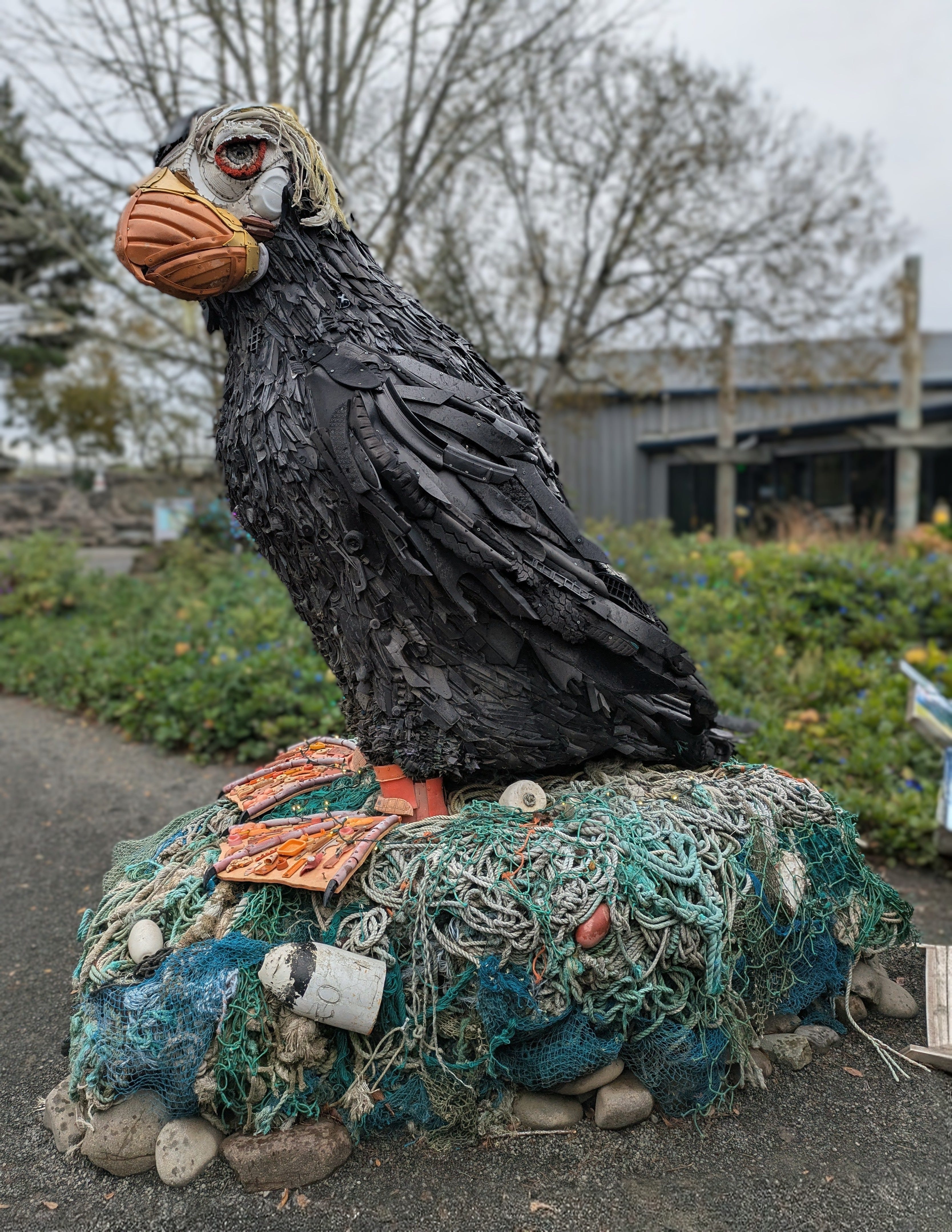
Netley the Puffin arrived first, as puffins often do, looking overdressed for the apocalypse. He wore a beak bright enough to suggest optimism, but his body was layered in nets, cords, and fragments that once drifted with purpose and then forgot it. He stood there politely, like a town greeter for the end of the world, insisting everything was probably fine.
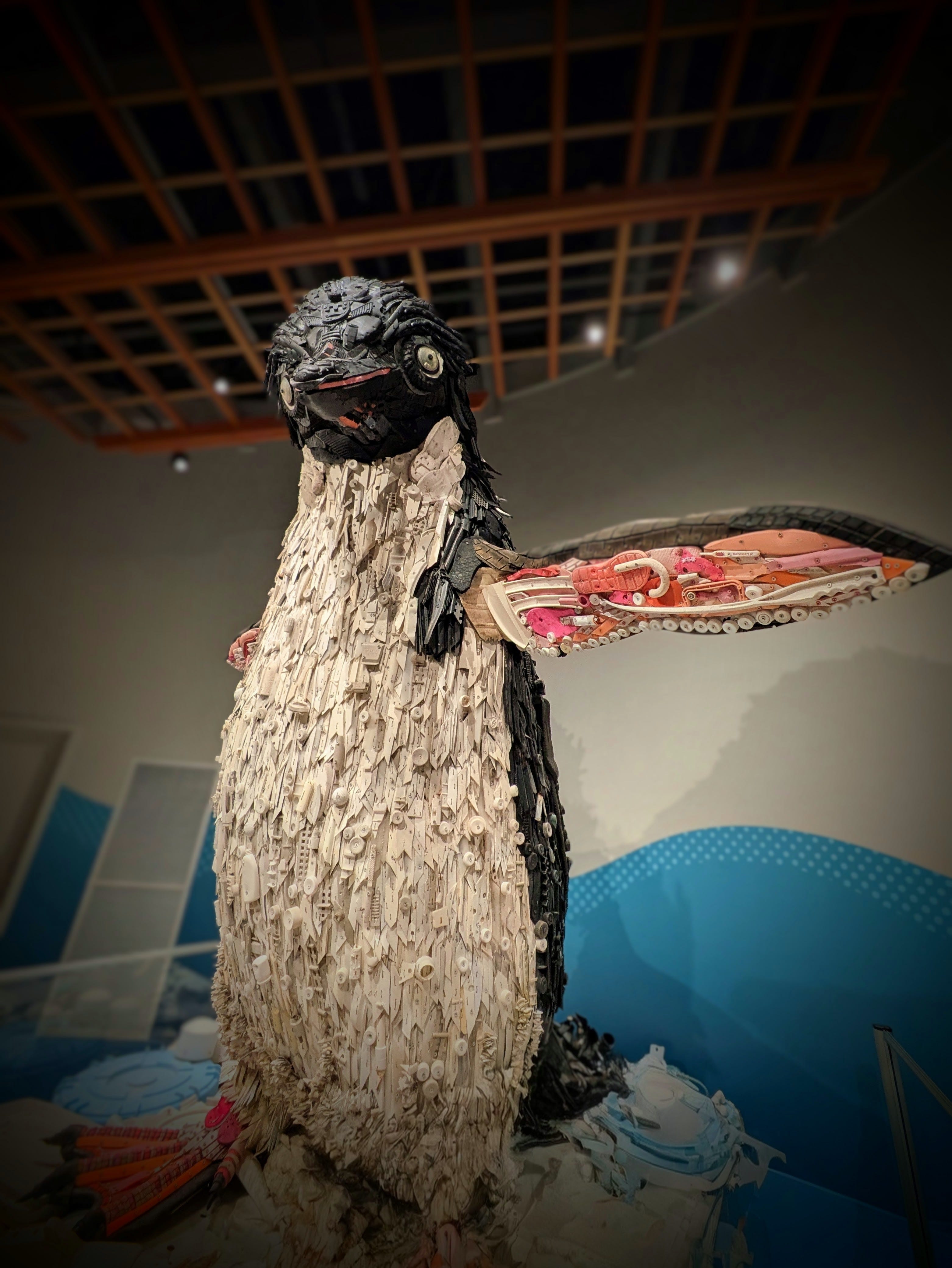
Percy the Penguin took things more personally. Penguins always do. He was built from the kind of plastic that shows up everywhere and belongs nowhere. Utensils, caps, bits of packaging that once promised convenience. He stood upright, flippers out, as if mid explanation. The tragedy is not that he was wrong. It is that he was reasonable.
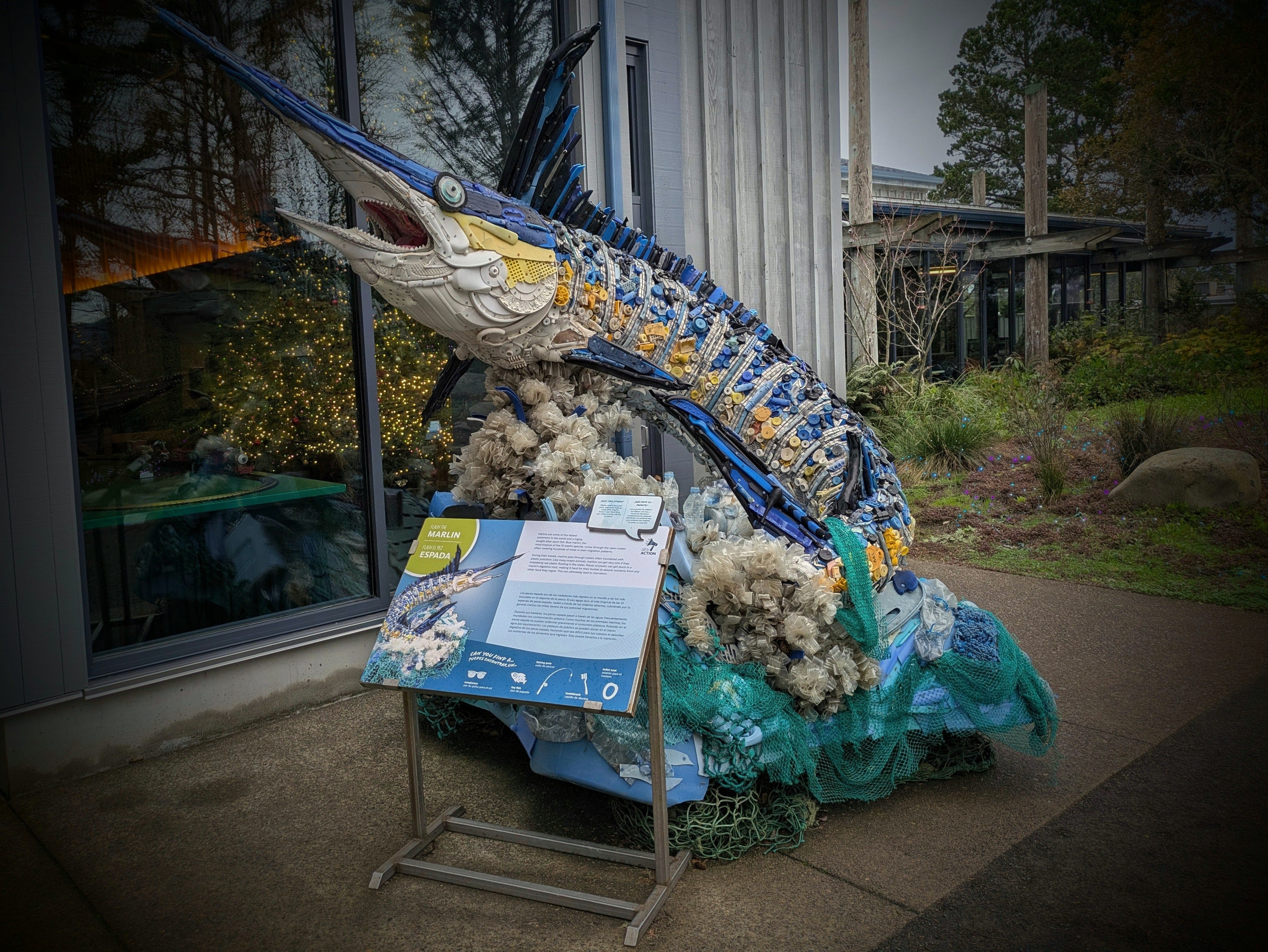
Espada the Marlin remembered speed. You could tell by the angle of his body, frozen in a moment that used to be forward. He was assembled from the tools meant to catch him, which feels personal even if the ocean insists it is not. His long blade cut through a wave of debris that pretended to be water. Once, he ruled the open blue by never slowing down.
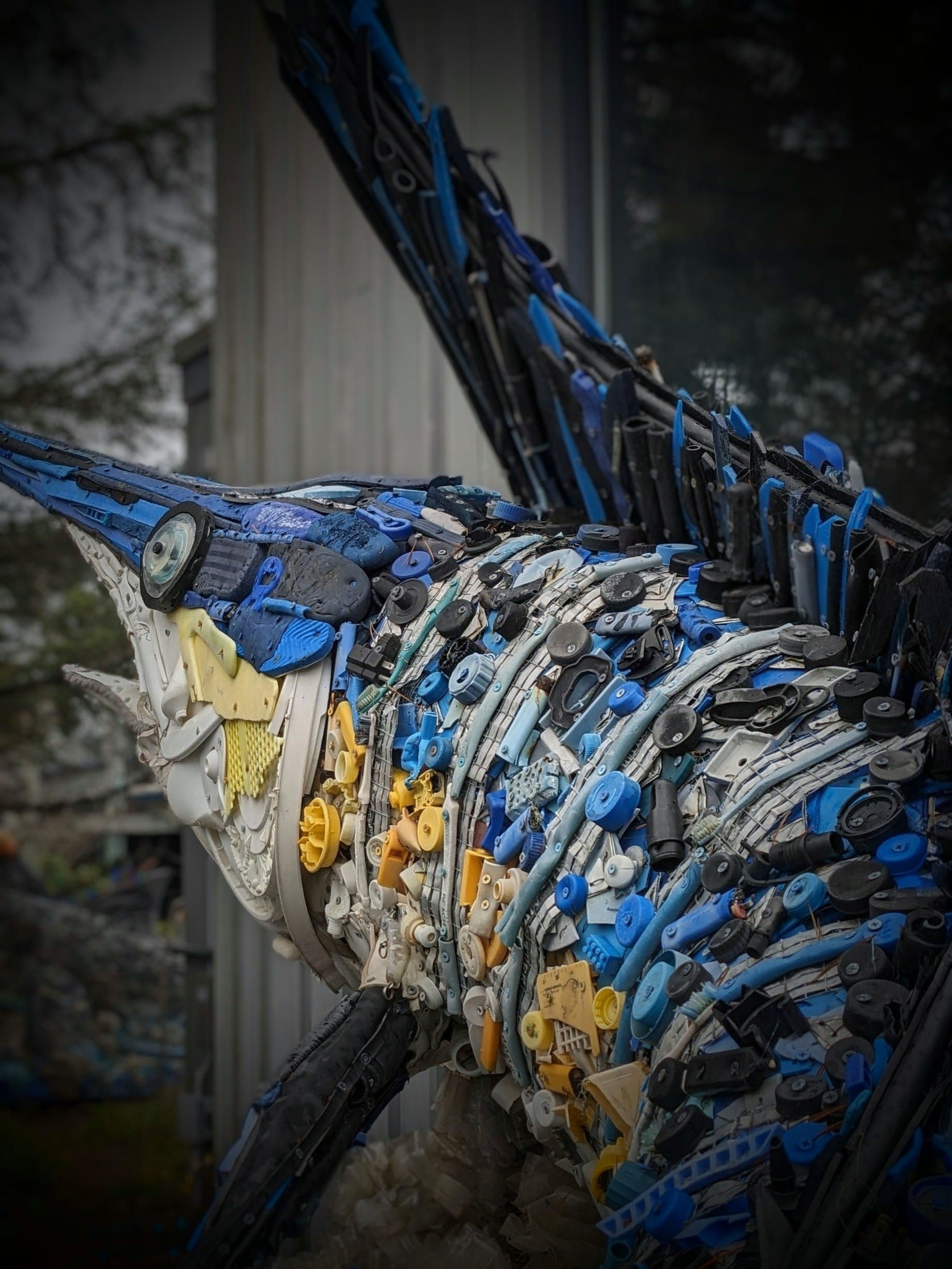
There is dark humor in that, the swordfish would admit if he were feeling generous. He became a sculpture by outrunning nothing. All that elegance, all that precision, finally stopped by what nobody bothered to retrieve. Momentum only works when the world lets you keep moving.
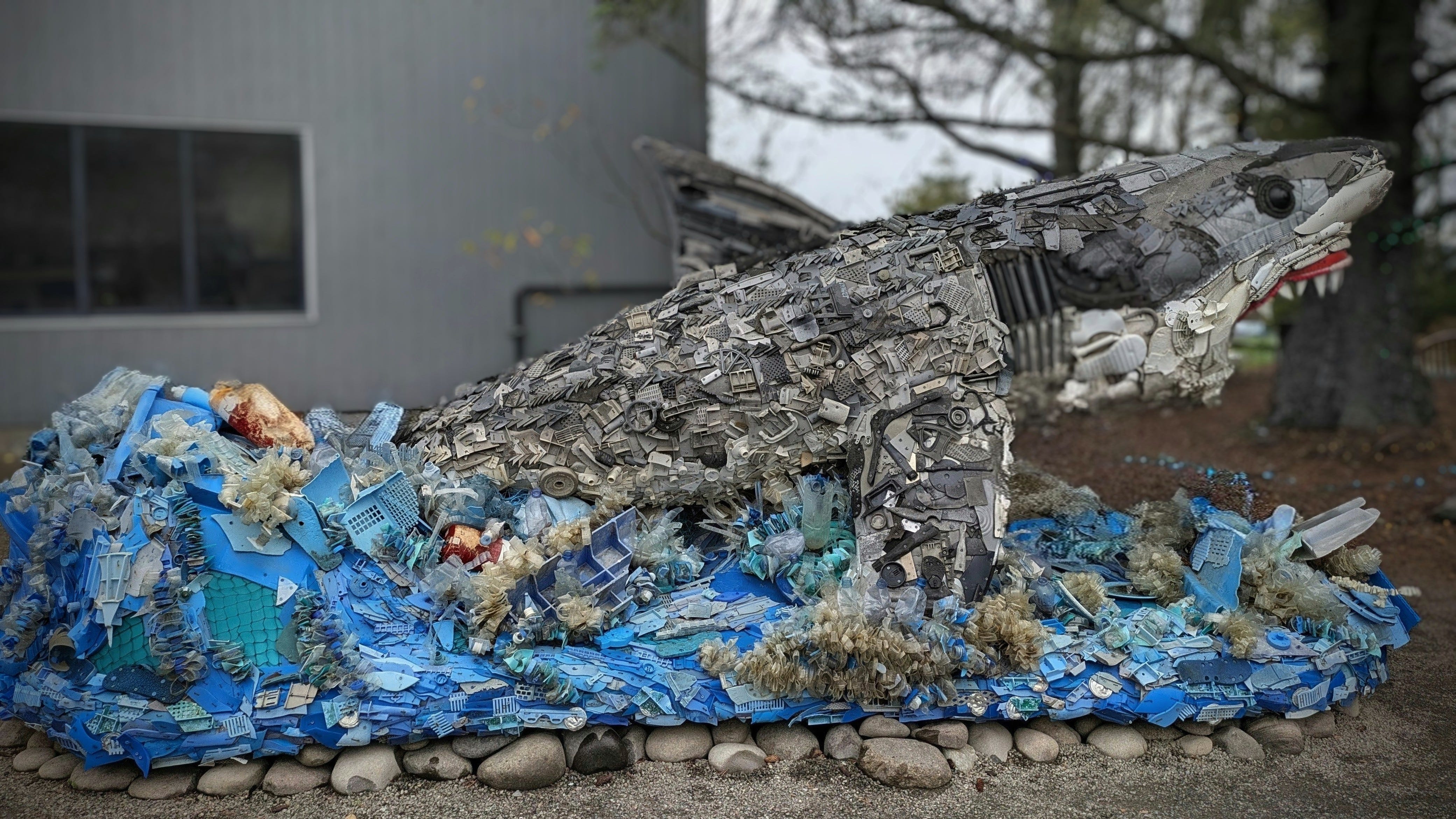
Bluewake the Shark gets more space because sharks always do. He is large, unavoidable, and built from layers of blue and gray plastic that once floated optimistically before sinking into responsibility. He does not lunge. He does not rush. He simply occupies the truth.
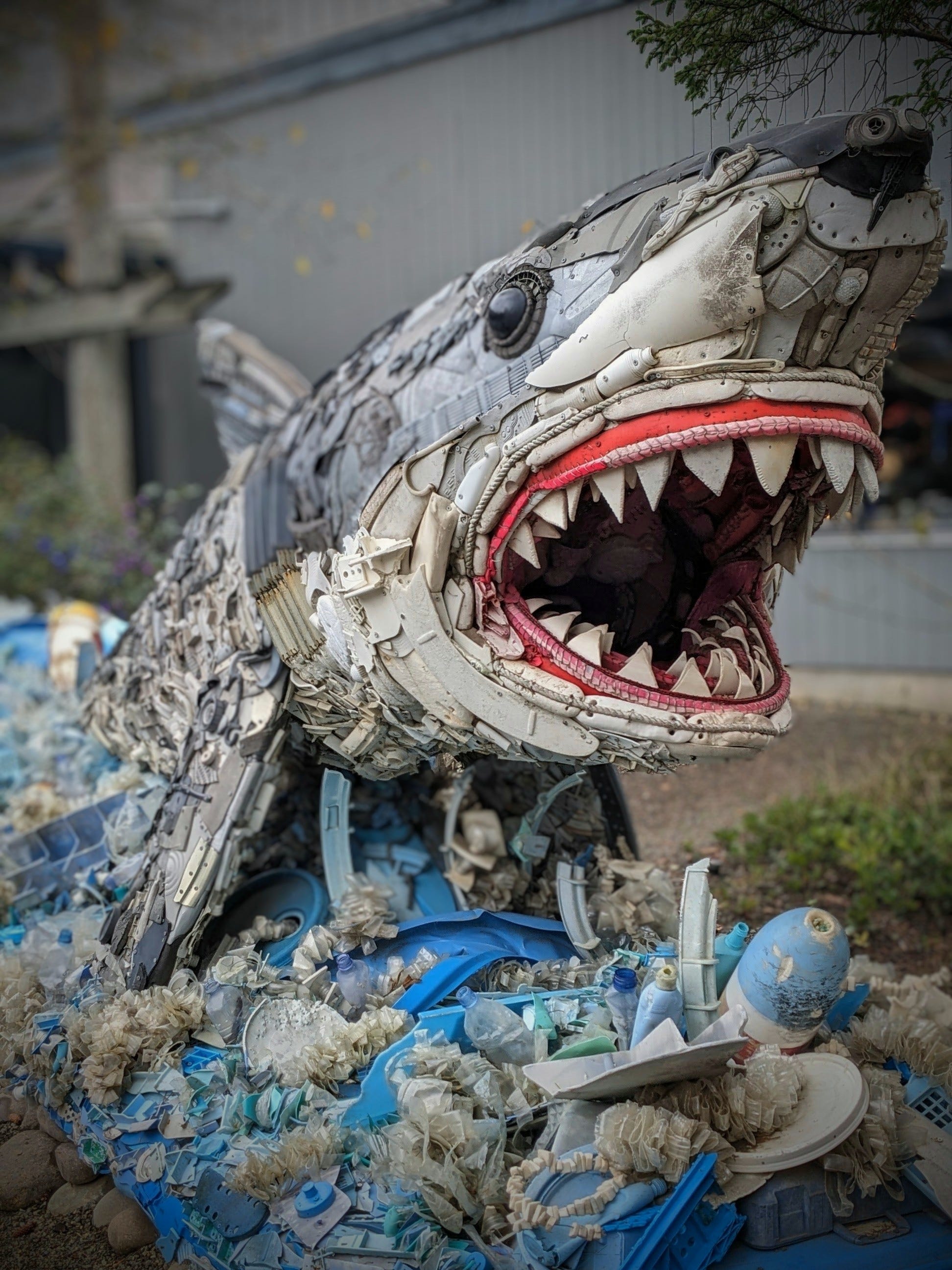
Sharks have survived everything except our inventions. Here he stops being a monster and becomes a mirror. He is made of bottle caps, crates, containers, and fragments that feel unimportant until you see them all together. He looks dangerous because he is honest.
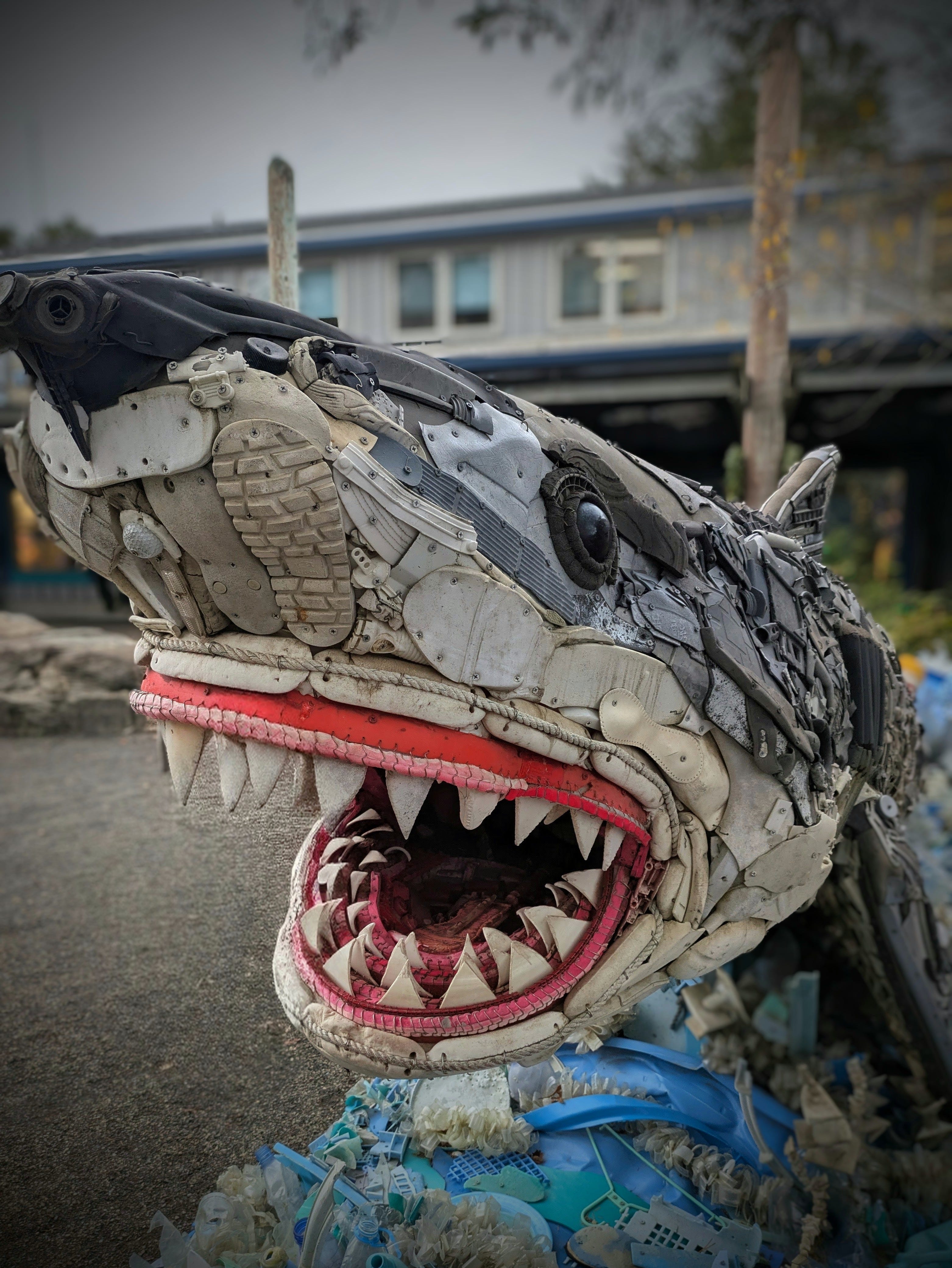
Now he is no longer chasing anything. He is stuck in a perpetual surge, mouth open, forever arriving. If he could speak, he would probably say something polite, maybe even grateful, about being turned into art instead of a statistic. The joke, dark and quiet, is that he did not need saving. The ocean does.